


Artificial intelligence (AI) is reshaping industries – from healthcare diagnostics to financial trading – but its transformative power depends on an often-overlooked foundation: AI infrastructure. This specialised ecosystem of hardware, software, and connectivity enables technologies such as chatbots, recommendation systems, and autonomous vehicles to operate effectively.
Unlike traditional cloud computing, which supports general applications such as e-commerce platforms or media streaming, AI infrastructure is purpose-built to meet immense computational demands of machine learning. Training sophisticated AI models, such as large language models (LLMs) that power virtual assistants, requires processing vast datasets across thousands of specialised processors. Deploying these models for real-time tasks, like generating instant recommendations, demands both speed and scalability. This dual challenge — training and deployment — necessitates unique architectural designs optimised for parallel processing, high-speed data transfer, and energy efficiency.
This article explores the core components of AI infrastructure, how it differs from traditional cloud systems, the innovative companies driving its evolution, and the investment opportunities within this dynamic sector. From specialised chips to energy-efficient data centres, AI infrastructure is a critical enabler of technological progress. For investors, it offers a way to gain exposure to AI’s growth through the foundational technologies that will shape industries for decades.
Nuts and bolts of AI infrastructure
AI infrastructure is the technological foundation for building, training, and deploying AI models, particularly large language models (LLMs) that fuel applications ranging from virtual assistants to personalised content recommendations. Unlike general-purpose computing, AI infrastructure is engineered for two distinct phases:
Training: The resource-intensive process of developing an AI model by processing vast datasets to optimise billions of parameters. This phase is comparable to a student spending months mastering complex subjects – requiring significant resources but occurring only once per model version.
Inference: The application of a trained model to deliver real-time outputs, such as answering user queries or generating recommendations. This phase prioritises speed, efficiency, and scalability – similar to a student instantly applying their knowledge across thousands of simultaneous tests.
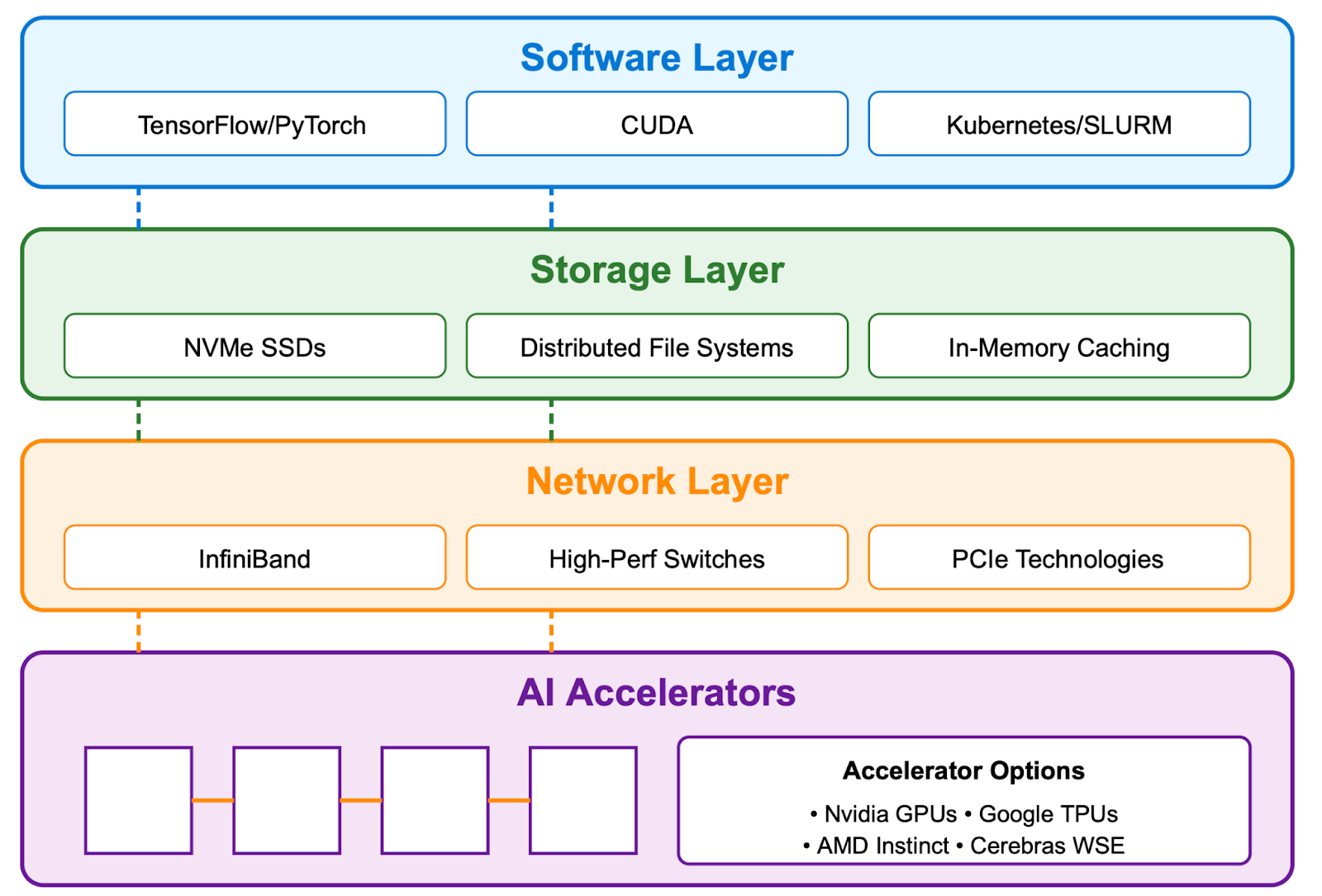
Next, we examine some of the key components of AI infrastructure (Figure A).
Figure A: AI Infrastructure Abstraction
AI accelerators: The computational engine
While traditional computing relies on Central Processing Units (CPUs), AI thrives on specialised accelerators designed for the parallel computations that dominate machine learning workloads.
- Graphics Processing Units (GPUs): Originally developed for graphics rendering, GPUs excel at performing thousands of calculations simultaneously. Nvidia currently leads the market with its Hopper and Blackwell architectures, designed for high-performance AI workloads. Its CUDA software ecosystem is widely adopted, but competitors like AMD (Instinct MI300) and Cerebras (Wafer-Scale Engine) are introducing alternatives that could challenge its position.
- Tensor Processing Units (TPUs): Google’s custom-designed AI chips, optimised for its TensorFlow and JAX frameworks. TPUs are application-specific integrated circuits (ASICs) engineered for machine learning, offering strong performance primarily within Google’s cloud ecosystem.
- Emerging Alternatives: Companies like Cerebras (with its massive Wafer-Scale Engine), AMD (Instinct MI300, focussed on cost-competitive performance), and AWS (Trainium, optimised for cloud training) are challenging Nvidia’s dominance. While these alternatives show promise, it remains to be seen whether they can match Nvidia’s blend of performance and mature software ecosystem.
Storage and connectivity: The data lifeline
While AI accelerators drive computations, storage and connectivity ensure data moves swiftly and seamlessly to support machine learning workloads. These components are vital for training (analysing vast datasets) and inference (delivering instant outputs), serving as the lifeline that keeps AI systems operational.
- High-Performance Storage: AI models demand rapid access to enormous datasets. NVMe Solid State Drives (SSDs) enable swift data retrieval, minimising delays during training and inference. Distributed file systems, such as Lustre or WekaFS, facilitate parallel access to terabytes of data across multiple servers, supporting large-scale AI tasks.
- Advanced Connectivity: AI’s processors require constant, low-latency communication, particularly when thousands operate together. High-speed interconnects, like Nvidia’s InfiniBand, provide rapid data transfer between systems. Specialised switches from providers like Arista and Broadcom manage substantial traffic flows, ensuring smooth coordination across processors. PCIe technologies, essential within servers, enable high-speed connections between GPUs and other components, maintaining efficiency in dense computing environments.
- Emerging Innovations: Novel storage solutions, such as AI-optimised cloud-native systems from AWS and Google Cloud, combine speed and scalability. In connectivity, smart Network Interface Cards (NICs) from companies like Mellanox offload data tasks, improving performance. These advancements aim to rival established systems while addressing AI’s evolving needs.
Together, storage and connectivity form the backbone of AI infrastructure, ensuring data availability and processor synchronisation. Leaders like Pure Storage, Arista, Broadcom, and cloud providers are shaping this critical layer of the intelligence era.
Software ecosystem: The orchestration layer
Hardware alone isn’t sufficient, AI infrastructure requires sophisticated software:
- AI Frameworks: Leading tools like TensorFlow, PyTorch, and JAX provide programming environments for developing and optimising machine learning models.
- Orchestration Platforms: Kubernetes and similar cloud-native orchestration platforms distribute complex workloads across thousands of processors, ensuring scalability.
- MLOps Tools: Specialised tools like MLflow and Kubeflow manage the machine learning lifecycle, from development to deployment and monitoring.
Power and cooling: The physical foundation
The extraordinary computational demands of AI create unprecedented physical challenges:
- Energy Consumption: Large-scale training clusters can consume 10-20 megawatts of power, equivalent to powering approximately 10,000 homes.
- Advanced Cooling: Solutions like direct liquid cooling are essential, as air cooling alone cannot manage the heat generated by dense AI compute clusters.
- Sustainable Design: With rising energy costs and environmental concerns, innovations like renewable energy integration and power-efficient designs are becoming competitive differentiators for infrastructure providers.
The interplay between these components determines the performance and economics of AI infrastructure. For investors, understanding how these elements fit together reveals potential bottlenecks and opportunities across the AI stack.
The rise of specialised AI infrastructure players
The explosive demand for AI compute has driven the emergence of a new breed of technology providers focused exclusively on AI infrastructure. Unlike traditional cloud providers like AWS, Microsoft Azure, and Google Cloud, which serve diverse workloads from web hosting to enterprise databases, these specialised players build infrastructure optimised specifically to meet AI’s unique requirements.
Traditional cloud infrastructure, with its general-purpose CPUs and standard networking, was not designed for the intensive matrix calculations of neural networks or the massive data exchanges required by distributed training. While hyperscalers are rapidly expanding their AI offerings, specialised providers have gained momentum by focusing exclusively on optimising for AI workloads — offering superior performance, cost efficiency, and access to scarce compute resources.
A key factor driving this specialisation is the current scarcity of high-performance AI accelerators, particularly Nvidia’s coveted H100 and Blackwell GPUs. Access to these chips has become a strategic advantage, with the most successful providers securing multi-year allocations through partnerships with Nvidia. This supply constraint has created a market dynamic where specialised providers with secured GPU supply can command premium pricing and long-term contracts.
In this section, we review some of the key players in this emerging segment.
CoreWeave
CoreWeave operates over 250,000 GPUs in 32 data centers, making it a top provider of AI infrastructure for companies like Microsoft and OpenAI. Its platform uses Nvidia’s fast networking and a system called SLURM on Kubernetes to manage workloads efficiently. This setup delivers up to 20% better performance (Model FLOPs Utilisation, or MFU) than competitors, accelerating AI training and processing.
CoreWeave’s business is built on long-term contracts, with a US$27 billion backlog (14 times its 2024 revenue of US$1.92 billion) reflecting both the supply-constrained market and customer confidence. These contracts typically span over four years, providing revenue visibility but introducing customer concentration risk, with two clients accounting for 77% of 2024 revenue.
The company’s recent acquisition of Weights & Biases enhances its software stack, offering developer tools for model training and positioning it as a full-stack provider rather than merely a hardware operator. CoreWeave has secured Nvidia GPU allocations through partnerships, supporting its global expansion. However, its reliance on Nvidia chips exposes it to supply chain risks, and competitors are exploring alternative accelerators.
Lambda Labs
While privately held Lambda Labs operates at a smaller scale than CoreWeave, it has carved out a niche serving startups, researchers, and small-to-medium enterprises. Its developer-friendly interfaces and on-demand pricing reduces barriers to entry for smaller clients, contrasting with hyperscalers’ enterprise-focused models.
Lambda Labs leverages Nvidia GPUs and high-performance networking to support training and inference for mid-scale models. Its focus on accessibility has made it a preferred choice for academic institutions and AI startups, enabling rapid prototyping and experimentation without the burden of long-term commitments.
The company’s smaller scale limits its ability to secure large GPU allocations or compete for enterprise contracts, but its agility positions it well for niche segments, particularly in democratising access to AI infrastructure for emerging players.
Nebius
Spun off from Yandex, Nebius has rapidly established itself as a distinctive player in the AI infrastructure market, operating a full-stack AI cloud with 30,000 Nvidia H200 GPUs as of March 2025 and plans to deploy over 22,000 Blackwell GPUs. Its platform, rebuilt in October 2024, integrates in-house hardware, energy-efficient data centres, and software tools like AI Studio – an inference-as-a-service offering with token-based pricing that has attracted nearly 60,000 users since launch.
Energy efficiency is one key differentiator for Nebius. Its Finland data centre features server-heat recovery systems and one of the world’s lowest power usage effectiveness (PUE) ratings, significantly reducing energy costs. The company’s proprietary servers, designed to operate at higher temperatures (40°C) with air cooling, lower maintenance costs and enable faster deployment.
On the software side, Nebius offers Soperator, a SLURM-based workload manager that optimises job scheduling, while its MLOps suite streamlines the AI lifecycle. Targeting developers, AI labs, and enterprises, Nebius is expanding in Europe and the U.S., with a focus on data sovereignty, which could be a strategic advantage in regulated markets.
Cerebras
Cerebras Systems, which is in the process of going public, takes a fundamentally different approach with its Wafer-Scale Engine (WSE), a massive chip integrating compute, memory, and interconnects for AI training and inference. Unlike GPU-based providers, Cerebras offers up to 10x faster training for certain LLMs compared to GPU clusters by eliminating much of the communication overhead inherent in distributed systems.
Its CS-3 system, powered by the third-generation WSE, competes with Nvidia’s DGX clusters for frontier AI research, while its Condor Galaxy supercomputers provide exascale compute for global AI development. Cerebras’ integrated hardware and software approach simplifies model development but targets a premium segment focussed on ultra-large models.
The current market heavily favours providers with access to Nvidia’s high-end GPUs, which are in short supply due to their dominance in AI workloads. This scarcity gives CoreWeave, Nebius, and Lambda Labs a competitive edge, as their GPU allocations attract clients unable to secure chips directly. However, the rise of alternative AI accelerators – like Cerebras’ WSE, AMD’s Instinct MI300, Google’s TPUs, and AWS’s Trainium – could disrupt this dynamic. If these accelerators match or surpass Nvidia’s performance, demand for Nvidia GPUs could slow, favouring hyperscalers with broader infrastructure, diverse chip portfolios, and greater financial resources to integrate alternatives. Hyperscalers’ economies of scale and established client bases could outpace specialised providers in a less supply-constrained market. Additionally, the capital intensity of scaling GPU clusters and data centres remains a significant barrier, requiring substantial debt financing and exposing providers to financial risks – especially if market dynamics shift.
Further, it is important to consider the broader risks facing these specialised AI infrastructure pure plays. Demand uncertainty looms, as long-term monetisation of AI applications remains unproven, potentially leading to industry consolidation around hyperscalers if GPU supply normalises. Customer concentration, such as CoreWeave’s reliance on two clients for 77% of 2024 revenue, introduces volatility. Capital intensity for expanding infrastructure, coupled with geopolitical factors like U.S.-China chip export restrictions and data sovereignty laws, could disrupt supply chains.
Energy constraints, too, are becoming critical, with AI’s massive power demands straining grids, necessitating sustainable solutions. These hurdles require specialised providers to innovate continuously while navigating a competitive, capital-intensive environment.
Sizing the opportunity
According to industry analysts, the AI infrastructure market is likely to experience rapid growth, driven by surging demand for high-performance computing and widespread AI adoption. Efficiency gains are accelerating this expansion, as lower costs enable broader deployment. This phenomenon is known as the Jevons Paradox – the idea that increased efficiency drives higher resource consumption.
As shown in Figure B, Precedence Research projects that “the global artificial intelligence infrastructure market size will grow from US$47 billion in 2024 to USD 499 billion by 2034 (CAGR of 26.60%). North America currently leads with US$19.36 billion in 2024, driven by innovation, mergers, and hyperscaler investments. The report highlights particularly strong growth in inference infrastructure, projected at a 31% CAGR compared to 23% for training infrastructure, reflecting the broader deployment of AI applications across sectors.
Figure B: The AI Infrastructure Market Opportunity

Source: Precedence Research, February 2025.
Morgan Stanley, in a recent report, offers an even more aggressive outlook, projecting cumulative AI infrastructure spending exceeding US$3 trillion by 2028, with US$2.6 trillion allocated to data centers (chips and servers).
Further, it appears we are approaching what could be called an “Inference Inflection Point” in the market. While media attention and investment have concentrated on training infrastructure – driven by GPU scarcity and the prestige of foundation model development – the long-term volume opportunity is increasingly shifting toward inference.
This inflection point could significantly shift competitive dynamics in the coming years. Providers with global distribution, energy-efficient designs for sustainable scaling, and flexible pricing models may capture disproportionate value as inference workloads explode. For investors, this suggests looking beyond today’s training-dominated headlines to identify companies well-positioned for the expanding inference market that will follow the current training-focussed boom.
We can already see strategic positioning for this shift among the major players. CoreWeave, while currently focused on training contracts, is expanding its inference capabilities. Nebius has aggressively developed its AI Studio platform specifically targeting inference workloads with token-based pricing. Even Cerebras, despite its high-end training focus, is exploring how its architecture can serve certain inference applications efficiently.
Conclusion
AI infrastructure is a cornerstone of the intelligence era, enabling transformative technologies through specialised hardware, advanced connectivity, and tailored software. Its evolution from traditional cloud computing marks a pivotal shift, driven by the demands of training and inference.
Specialised providers such as CoreWeave, Lambda Labs, Nebius, and Cerebras are redefining the landscape with innovative designs and full-stack solutions, but success hinges on several critical factors.
Key considerations for the sector’s future include:
- The pace of AI adoption and the scalability of infrastructure solutions across industries.
- Innovations in energy efficiency, connectivity, and hardware to address power and performance constraints.
- Competition between hyperscalers and specialised providers, differentiated by pricing, software, and niche expertise.
- Geopolitical and regulatory developments impacting supply chains and market access.
The likely winners will be companies that balance technological innovation with practical scalability, addressing enterprise needs while navigating capital and energy constraints. The opportunity extends beyond infrastructure providers to the broader ecosystem of semiconductor, software, and edge computing players.
AI infrastructure represents a transformative force, but its path forward requires careful analysis of technological capabilities, market dynamics, and disciplined execution.
At AlphaTarget, we invest our capital in some of the most promising disruptive businesses at the forefront of secular trends; and utilise stage analysis and other technical tools to continuously monitor our holdings and manage our investment portfolio. AlphaTarget produces cutting edge research and our subscribers gain exclusive access to information such as the holdings in our investment portfolio, our in-depth fundamental and technical analysis of each company, our portfolio management moves and details of our proprietary systematic trend following hedging strategy to reduce portfolio drawdowns. To learn more about our research service, please visit https://alphatarget.com/subscriptions/.
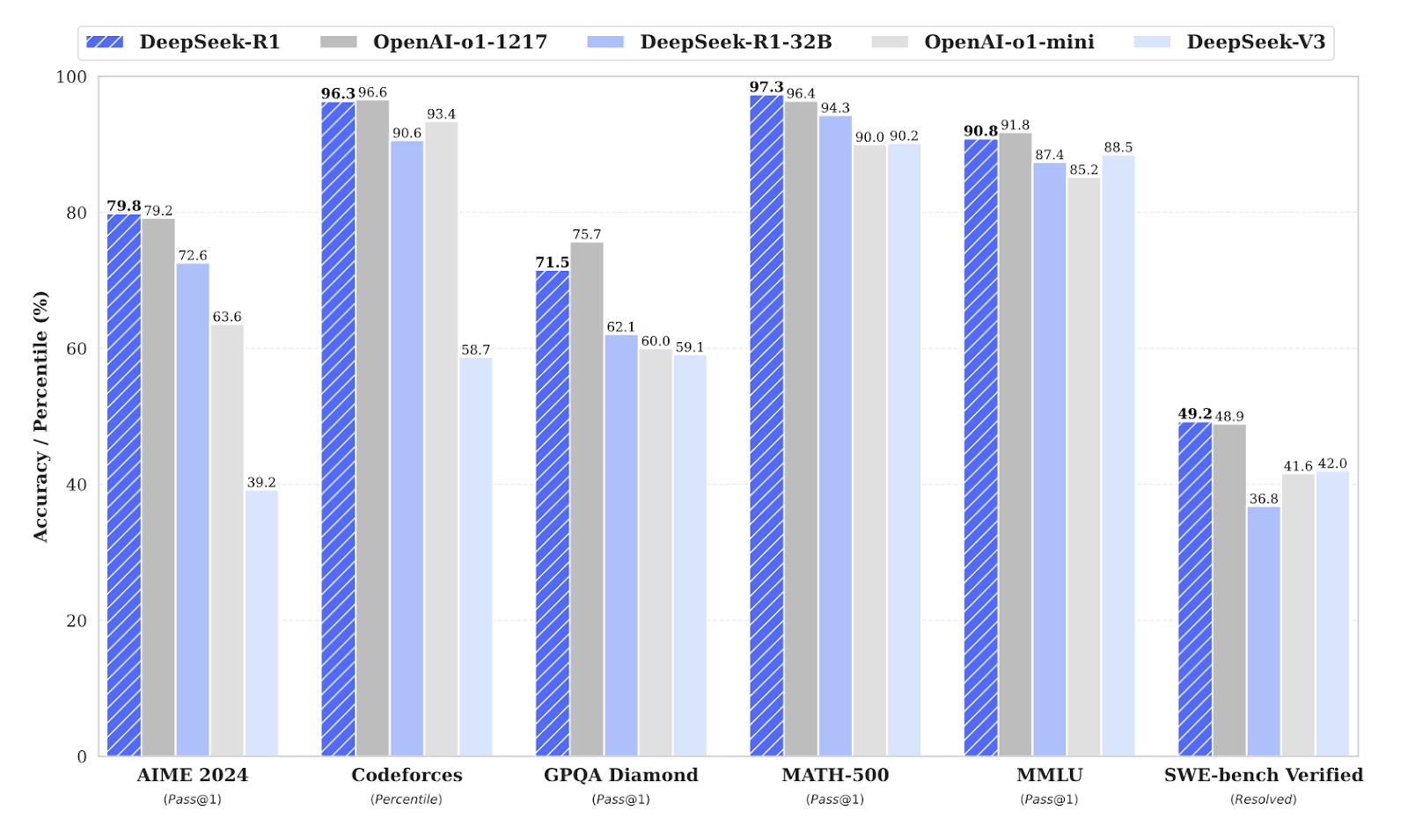
Chinese company DeepSeek has taken the AI world by storm with their recent unveiling of cutting-edge large language models (LLMs), specifically DeepSeek-V3 and its reasoning-focused variant DeepSeek-R1. These open-source models demonstrate performance comparable to leading competitors (Figure A) at roughly 1/10th the training cost and significantly lower inference cost. In simple terms, training cost refers to the expenses incurred in developing and fine-tuning an AI model, including the computational resources, data preparation, and model optimisation required to build the model. On the other hand, inference cost refers to the ongoing costs of running the trained model to make predictions or decisions i.e. when ChatGPT answers users’ queries.
By releasing its models under an open-source license, DeepSeek allows other organisations to replicate and build upon its work. This democratises access to advanced AI technologies, enabling a broader range of entities to develop and deploy AI solutions at a much lower cost. The development raises fundamental questions about the economics of AI: While improved efficiency could accelerate AI adoption, it challenges assumptions about near-term semiconductor demand for training capex, cloud infrastructure spending, and the distribution of value across the technology landscape.
In this article, we examine DeepSeek’s key technical innovations, explain how they achieved frontier model performance despite US chip export restrictions, and analyse the broader implications for the technology industry.
Figure A: Benchmark Performance of DeepSeek-R1
Source: DeepSeek-R1 Technical Report
Market reaction and initial impact
The US stock market awakened to DeepSeek’s disruption in the third week of January. That coincided with the release of DeepSeek-R1 (on 20 January 2025). The model, released under the MIT licence along with its source code, demonstrated exceptional capabilities in reasoning, mathematics, and coding tasks, matching the performance of OpenAI’s o1 “reasoning” model at a fraction of the cost. DeepSeek complemented this release with a web interface for free access and launched an iOS application that quickly reached the top of the App Store charts.
Given the US export ban on top-end GPUs to China, which many argued was necessary for the US to maintain its lead in the AI race, the market was shocked to see a China-based frontier model rival the capability of US-based models! By 27 January, as news of DeepSeek’s breakthrough gained widespread attention, technology stocks experienced sharp declines, with Nvidia falling 16%, Oracle 12% and smaller AI infrastructure stocks declining 20-30% in a single trading session!
While R1’s release finally got the market’s attention, the foundation was laid a month earlier when DeepSeek-V3 was released around Christmas. On 26 December 2024, Andrej Karpathy (formerly Director of AI at Tesla and founding member of OpenAI) highlighted the remarkable achievement: DeepSeek-V3 had reached frontier-grade capabilities using just 2,048 GPUs over two months – a task that traditionally required clusters of 16,000+ GPUs (Figure B). This efficiency gain fundamentally challenged assumptions regarding the computational resources required for developing advanced AI models.
Figure B: Andrej Karpathy on DeepSeek-V3

Source: X
Technical innovations
DeepSeek’s efficiency gains arise from several key architectural innovations that fundamentally rethink how large language models process and generate text.
At its core, DeepSeek employs a Mixture-of-Experts (MoE) approach – similar to relying on the most relevant specialist instead of the entire team of doctors when treating a patient. By selectively activating only 37B of 671B parameters for each piece of text (token), the system achieves remarkable efficiency gains. For perspective, Meta’s Llama 3 405B required 30.8M GPU-hours, while DeepSeek-V3 used just 2.8M GPU-hours – an 11x efficiency gain. At an assumed cost of US$4 per GPU hour, this translates to roughly US$11.2 million in training costs versus US$123.2 million for Llama 3 405B.
There are several technical innovations worth calling out that focus on efficiency, including:
- Multi-head Latent Attention (MLA): MLA compresses the information required in the “attention” mechanism through low-rank projections. MLA is analogous to a very good summary of a large document. This technique drastically reduces memory demands during inference while retaining the full performance of standard multi-head attention.
- Multi-Token Prediction (MTP): Rather than generating one word (token) at a time, MTP attempts to predict multiple future words simultaneously. This achieves an 85-90% success rate in predicting upcoming tokens, resulting in 1.8x faster text generation.
- Auxiliary-loss-free load balancing: Traditional MoE architectures struggle to balance workload across the “experts.” This is akin to a medical emergency department where some doctors are overworked versus others! DeepSeek-V3 introduced a novel “dynamic bias adjustment” mechanism that ensures balanced expert workloads without compromising performance, achieving 90% expert utilisation.
Prior to DeepSeek’s arrival, many of these architectural and design choices were already known in the research community. For instance, it was well understood that the MoE approach yields 3x to 7x efficiency gains compared to dense models. Nonetheless, DeepSeek managed to push the boundaries of efficiency even further without compromising model quality. By building DeepSeek efficiently without relying on state-of-the-art GPUs, the company demonstrated that necessity is the mother of invention
Reinforcement learning breakthrough
DeepSeek’s R1 technical paper reveals a significant step change in how reasoning capabilities can be developed in LLMs. The widely accepted standard had been to use supervised learning with human-curated datasets followed by reinforcement learning with human feedback (RLHF). DeepSeek, however, showed that sophisticated reasoning can emerge primarily through reinforcement learning alone. In its technical report, DeepSeek notes that its work is “the first open research to validate that reasoning capabilities of LLMs can be incentivized purely through RL, without the need for SFT [Supervised Fine-Tuning].”
The significance of this approach lies in its ability to transcend the limitations of human-demonstrated problem-solving patterns. Traditional supervised learning methods can only replicate reasoning strategies present in the training data. In contrast, DeepSeek’s reinforcement learning approach allows the model to discover novel problem-solving strategies through systematic exploration. This is analogous to the difference between learning chess by studying grandmaster games versus learning by playing millions of games and discovering new strategies independently.
Overcoming the US chip ban
DeepSeek’s technical reports also shed light on how the company navigated the U.S. export ban on top-end GPUs like the Nvidia H100. The H800 GPUs available (legally) to DeepSeek significantly reduced NVLink link bandwidth and double-precision computing capabilities. To overcome these limitations, DeepSeek implemented optimisations such as:
- Restricting token processing to groups of 4 GPUs, thus minimising data transfer bottlenecks.
- Developed techniques to handle internal (NVLink) and external (InfiniBand) communication concurrently.
- Implemented FP8 mixed-precision training, halving memory requirements compared to traditional approaches.
- Developed custom kernel software for efficient local expert forwarding.
Investment implications
DeepSeek’s innovations will potentially upend how value is created and captured in the AI industry. In this section, we consider some of the potential ramifications of DeepSeek’s innovations, cost efficiency, and release under an MIT license.
At a high-level, DeepSeek’s innovations and cost efficiency are likely to force a re-think on the ravenous appetite for high-end AI accelerators. However, technology history suggests that improved efficiency often leads to increased total resource consumption — a phenomenon known as the Jevons paradox. As barriers to entry fall, more organisations can experiment with and deploy AI solutions, potentially driving higher aggregate demand for AI infrastructure.
Naturally, for semiconductor companies, especially those focused on AI acceleration, these trends present both challenges and opportunities. DeepSeek’s ability to produce a top-grade frontier LLM without access to NVIDIA’s high-end GPUs suggests that some companies might have been complacent with respect to engineering and architectural optimisations, and have instead chosen to use a sledgehammer capex approach to develop increasingly sophisticated models. It is possible that DeepSeek’s success will cause some rethink on this front, which might in turn moderate high-end GPU demand for training capex. This means that companies might be able to do more with their existing GPUs and their useful lives might even be extended. However, the fundamental dynamics of AI development remain compelling: As long as scaling laws hold – where model performance improves as a power-law function of size, dataset, and compute resources – we can expect compute-hungry AI algorithms to require ever more processing power to solve increasingly challenging problems. Moreover, as AI models become more widely available, the demand for inference-optimised semiconductors (inference capex) is likely to grow substantially.
Major cloud providers’ current capital expenditure plans suggest confidence in this longer-term vision despite efficiency gains. Microsoft has reiterated its US$80 billion capex commitment, while Alphabet projects approximately US$75 billion in CapEx for 2025, up significantly from US$52.5 billion in 2024. Amazon expects to maintain its Q4 2024 quarterly investment rate of US$26.3 billion through 2025. While it is potentially too early to see strategic shifts in response to DeepSeek’s innovations, these investment levels suggest hyperscalers anticipate growing demand for AI compute, and particularly inference workloads. Notably, hyperscalers are positioning themselves as model-agnostic platform providers – evidenced by Microsoft making DeepSeek’s R1 available on GitHub and Azure AI Foundry despite its close partnership with OpenAI, and Amazon integrating DeepSeek R1 into its Bedrock and SageMaker platforms.
This evolution signals a broader shift in competitive advantage from raw model capabilities towards proprietary data assets, distribution channels, and specialised applications. Enterprise software businesses, which typically focus on building applications around models rather than developing models themselves, stand to benefit from the widespread availability of high-quality open-source foundation models. As these models improve and become more accessible, competitive advantage will increasingly derive from unique data assets and distribution channels. Enterprises with specialised data repositories, such as Salesforce (CRM data) or Bloomberg (financial data), could develop highly targeted AI agents that leverage their proprietary data advantages.
The platform landscape presents varying implications for different players. Meta appears well-positioned to benefit from LLM commoditisation (a strategy it has followed with its own Llama models), as it can deploy AI innovations to enhance content discovery and user engagement across its vast social networks. Alphabet presents a more complex case: while its Google search advertising model faces potential disruption from AI-powered “answer engines,” its YouTube platform and cloud business could benefit substantially from increased AI adoption and deployment.
Obviously, there is a question with respect to where one would undertake the inference task. DeepSeek’s approach to providing “distilled” models (1.5B–70B parameters) opens new possibilities for edge computing. These smaller models enable resource-constrained devices to leverage advanced AI capabilities while navigating practical constraints like battery life and thermal limitations. Apple’s current hybrid approach — running on-device LLMs for certain tasks while routing others to private cloud infrastructure built using Apple’s M-series silicon – could become the standard blueprint, particularly in consumer applications. This hybrid model effectively balances privacy considerations and response times with computational capabilities.
As the industry evolves, significant uncertainties remain regarding the distribution of economic value between frontier model developers, infrastructure providers, platform companies, and application developers. While investors will need to keep a close eye on these shifting value propositions, and the winners and losers are likely to emerge only in the fullness of time, one aspect appears increasingly clear: We are entering a fascinating phase of AI development. The improved efficiency and accessibility demonstrated by innovations like DeepSeek could democratise access to AI capabilities, potentially making businesses and consumers the ultimate beneficiaries of this technological revolution.
Conclusion
DeepSeek’s innovations are not just a technical achievement; they signal a potential restructuring of the AI industry’s competitive dynamics. By achieving frontier model performance at roughly 1/10th the traditional training cost and releasing the model under the MIT license, DeepSeek has challenged fundamental assumptions about AI development and deployment.
In this article, we have explored three key implications of this development. First, we have considered the balance between training and inference capex through the lens of Jevons paradox which suggests that lower barriers to entry could drive higher aggregate compute consumption over time. Second, we have considered the potential shift in value creation from raw model capabilities towards data assets, distribution platforms, and specialised applications. Finally, we have contemplated how the emergence of efficient “distilled” models enables new deployment paradigms, from edge computing to hybrid architectures, potentially expanding AI’s practical applications.
For investors, there are many nuances to consider including:
- The near-term risks versus medium to long-term opportunities for semiconductor businesses.
- The position of hyperscalers as model-agnostic compute and inference platforms.
- Democratisation of AI models and its effects on enterprise software businesses.
- The pros and cons for platform companies with access to unique data and/or strong distribution channels.
While the geopolitical implications of DeepSeek are still unfolding, the development clearly demonstrates that multiple paths to AI progress exist beyond simply scaling up computing resources and that a path to more democratised AI models is likely feasible. We believe organisations across the spectrum will be reassessing their AI strategies in light of these developments, with perhaps their lens focused on “value addition” and “Return on Investment” rather than raw model size or computing power. In a nutshell, DeepSeek is excellent news for the users of AI and by lowering both the training and inference costs, it has massively increased the Return on Investment (ROI) on AI.
At AlphaTarget, we invest our capital in some of the most promising disruptive businesses at the forefront of secular trends; and utilise stage analysis and other technical tools to continuously monitor our holdings and manage our investment portfolio. AlphaTarget produces cutting edge research and our subscribers gain exclusive access to information such as the holdings in our investment portfolio, our in-depth fundamental and technical analysis of each company, our portfolio management moves and details of our proprietary systematic trend following hedging strategy to reduce portfolio drawdowns.
To learn more about our research service, please visit: https://alphatarget.com/subscriptions/.
Agentic artificial intelligence (AI) systems are fast-emerging as the next leap forward in AI systems development. Unlike traditional generative AI, which excels at creating content and responding to specific queries, agentic AI takes this capability further by enabling autonomous decision-making and proactive task execution within a given environment. This shift from passive content creation to active, decision-making AI has the potential to revolutionise how businesses operate. At a high level, while generative AI creates, agentic AI acts.
What is an AI agent?
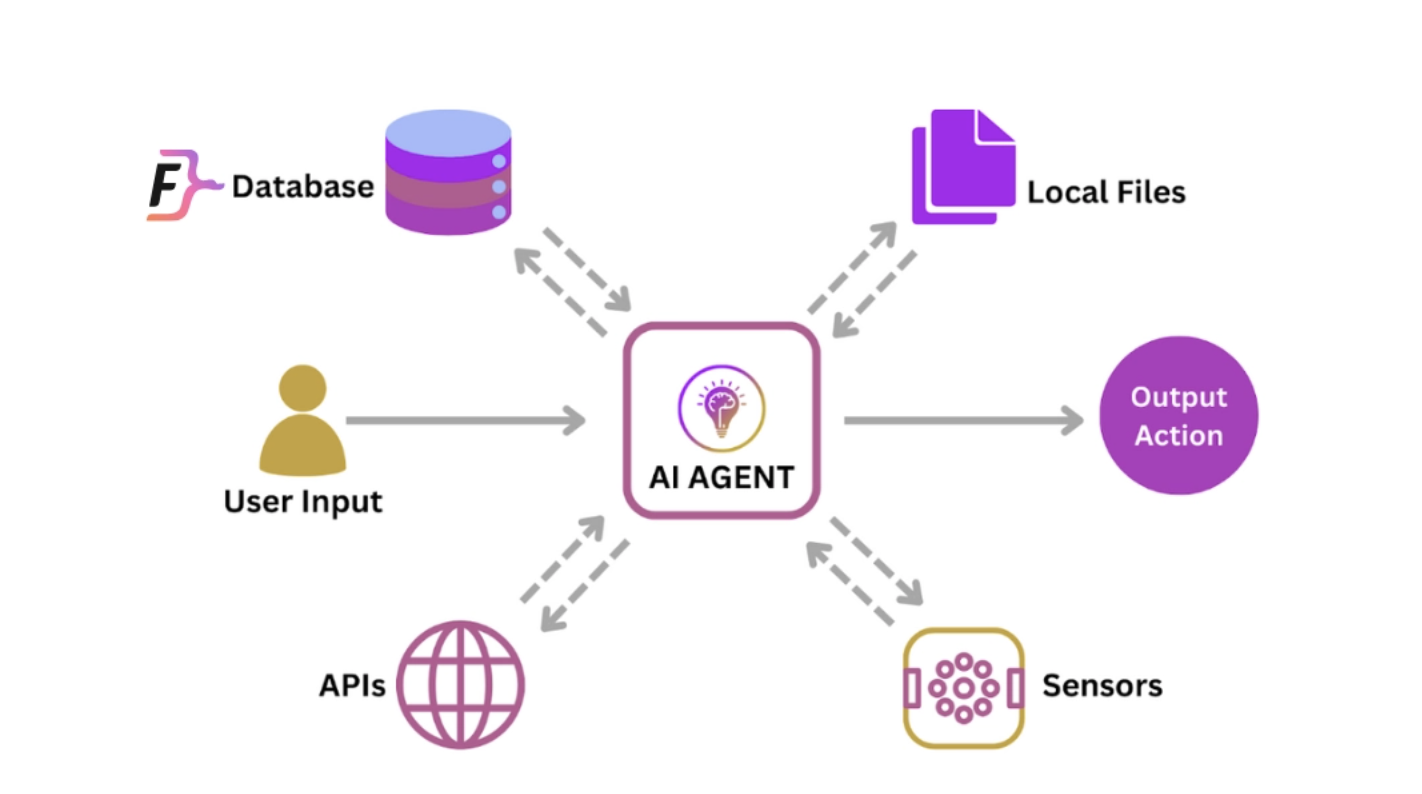
An AI agent is a software program (Figure A) designed to interact with its environment, gather data, and perform tasks autonomously to achieve predefined goals. While humans define these goals, the AI agent independently determines the best course of action to fulfill them.
For instance, in a contact centre, an AI agent can resolve customer queries by asking questions, retrieving information from internal resources, and providing solutions. Based on the customer’s responses, it decides whether to resolve the query itself or escalate it to a human representative.
AI agents function as rational agents that can analyse data and their environment to make informed, goal-oriented decisions. The following key capabilities set them apart from traditional software:
- Perception and Data Gathering: AI agents use interfaces to sense their environment. For instance, a robotic agent collects data through physical sensors, while a chatbot interprets text input from customer queries.
- Decision-Making: Using the collected data, AI agents predict the best outcomes and determine the next steps to achieve their objectives. For example, a self-driving car navigates obstacles using sensor inputs and pre-trained models.
- Collaboration: AI agents can collaborate with other agents and humans, in order to complete multi-step complex tasks.
Figure A: AI agent architecture
Source: Falkor DB
Benefits of AI
AI agents bring significant advantages to businesses and customers alike by streamlining operations and enhancing experiences. Key benefits include:
1. Enhanced Productivity
AI agents streamline operations by automating tasks, reducing inefficiencies, minimising human errors, and eliminating the need for manual effort, resulting in lower operational expenses. Their ability to adapt to evolving conditions ensures steady performance, further enhancing resource efficiency.
2. Cost Efficiency
AI agents automate workflows, cutting down inefficiencies, reducing human errors, and eliminating manual tasks, which lowers operational costs. Their flexibility allows them to maintain consistent performance, even in dynamic conditions, further enhancing resource utilisation.
3. Improved Decision-Making
Sophisticated AI agents utilise machine learning (ML) to process vast amounts of real-time data. This capability enables businesses to make accurate predictions and data-driven decisions swiftly. For example, AI agents can analyse market trends to optimise product positioning during an advertising campaign.
4. Superior Customer Experience
AI agents enhance customer engagement by delivering personalised interactions, prompt responses, and tailored recommendations. Businesses can boost customer satisfaction, conversion rates, and loyalty through these advanced, data-driven insights.
Given the unique capabilities of AI agents, the world’s transition to using active AI agents could prove to be an inflection point in how software is built and consumed. Currently, several major software businesses are evolving their technology stacks with an AI-first strategy.
For instance, enterprise giant Microsoft has integrated AI agents across its enterprise suite through its Copilot initiative, with capabilities ranging from automated coding, email summarisation, intelligent scheduling and improved search capabilities.
Similarly, IT workflow automation company ServiceNow is deploying specialised AI agents for IT service management, customer service, HR, and procurement workflows. These agents can handle everything from IT ticket resolution to employee onboarding, learning from each interaction to improve their performance while maintaining human oversight for critical decisions.
AI agents: A brief history
The concept of AI agents is not entirely new – it has roots in the “expert systems” of the 1960s and 1970s. These early attempts at AI used rule-based programming to mimic human decision-making in specific domains.
MYCIN, developed at Stanford in the 1970s, was one of the first expert systems. Its inference engine could diagnose blood infections and recommend antibiotics, using approximately 600 predefined rules. While groundbreaking for its time, these rule-based systems were inherently limited by their inability to learn from experience or handle novel situations.
Arguably the biggest step change enabling modern AI agents came with two more recent significant advances in artificial intelligence. First, deep learning breakthroughs in the 2010s enabled systems to learn from vast amounts of data and improve their performance over time. Then, the development of large language models (LLMs) in the early 2020s provided the sophisticated reasoning and natural language capabilities that make today’s AI agents possible.
These foundation models dramatically improved natural language processing capabilities, enabling AI agents to understand nuanced instructions, generate contextually appropriate responses, and engage in more natural interactions. This advancement means agents can now interpret complex business requests and communicate their actions clearly to users.
Another crucial innovation is retrieval-augmented generation (RAG), which allows AI agents to combine their built-in knowledge with real-time access to enterprise data and documents. This technology enables agents to ground their responses in an organisation’s specific context, policies, and procedures while maintaining accuracy and relevance. RAG is a key tool in preventing LLMs from “hallucinating” – that is, generating misleading or inaccurate results.
Overall, this progression from simple rule-based systems to today’s sophisticated AI agents represents more than incremental improvement – it marks a fundamental shift in how organisations can deploy AI. Rather than following predetermined rules, modern agents can understand context, learn from experience, and autonomously pursue objectives while operating within appropriate business constraints.
AI agents in action
Major technology companies are making significant investments in agentic AI as the convergence of advanced language models, deep learning capabilities, and enterprise integration frameworks has created new opportunities for business transformation. In terms of the business case, there are opportunities with respect to cost efficiency, enhanced productivity, and improvements in outcomes, as demonstrated by a number of early deployments:-
Automating internal operations: At telecommunications giant Deutsche Telekom, an AI agent named “askT” is transforming the company’s internal operations. Serving approximately 10,000 employees weekly, askT not only answers questions about internal policies and benefits but is also actively managing administrative tasks like leave applications. In addition to cost efficiencies, the system provides consistent, 24/7 service availability while continuously learning from interactions to improve its responses.
Reimaging financial analysis: In the financial sector, organisations are leveraging AI agents’ sophisticated analytical capabilities. Moody’s, for instance, has implemented AI agents to analyze vast amounts of market data and company financials, enabling more comprehensive risk assessments. Moody’s system consists of a network of 35 specialized AI agents, each designed for specific analytical tasks and working within a coordinated multi-agent system. According to Nick Reed, Chief Product Officer at Moody’s, these agents have transformed how the company conducts crucial research tasks that were previously outsourced to lower-cost regions, such as industry benchmarking and SEC filing reviews.
Customer experience innovation: eBay’s implementation of AI agents is another illustration of the technology’s potential impact across multiple business functions. The company’s sophisticated “agent framework” orchestrates multiple LLMs for various tasks such as assisting with customer service inquiries, writing code, and creating marketing campaigns. The system learns from employee interactions to understand specific preferences and work styles, enabling increasingly autonomous operation. eBay is considering expanding this capability to help buyers find items and assist sellers with listings, showcasing how AI agents can enhance core business operations while improving the customer experience.
The SaaS disruption debate
Microsoft CEO Satya Nadella made a rather provocative claim during his appearance on the BG^2 podcast with hedge fund manager and venture capitalists Brad Gerstner and Bill Gurley. Nadella noted that “the business logic is all going to these AI agents” and suggested that they would fundamentally transform how organisations interact with their enterprise Software as a Service (SaaS) applications. This viewpoint challenges the traditional SaaS model that has dominated enterprise software for the past two decades.
Currently, business applications like CRM, ERP, HCM, and IT workflow systems primarily function as sophisticated data management tools, operating on a CRUD (Create, Read, Update, Delete) model with humans directing most operations. Nadella’s vision suggests a fundamental shift where the intelligence layer of these systems will migrate from isolated applications to a unified AI layer in the technology stack.
In a utopian world with no accumulated technology debt, one could imagine a single AI layer seamlessly handling almost all business processes and functionalities. This scenario is not entirely theoretical; tech-savvy startups might build their systems around an AI-first architecture, potentially bypassing traditional business applications in favor of a more streamlined, AI-driven approach with simple database backends.
However, the reality is more complex. Enterprises have valuable data locked within various legacy systems and platforms, therefore realising a unified AI tier that can seamlessly orchestrate all business operations is extremely challenging. Furthermore, the incumbent leaders are not standing still. For instance, ServiceNow’s AI agents are being designed to work across previously siloed workflows, from IT service management to HR processes. Similarly, Microsoft is integrating Copilot capabilities throughout its enterprise suite, while Salesforce’s Einstein GPT and AI Cloud are reimagining customer relationship management and employee interactions through the lens of AI-driven automation.
Given the current state-of-play, predictions about the death of SaaS appear exaggerated and we expect many SaaS players to evolve by incorporating AI features. Companies that can effectively bridge the gap between legacy systems and AI-driven operations stand to capture significant value in the enterprise market. Infrastructure providers supporting AI operations, particularly those offering solutions for data integration and AI orchestration, could see increased demand. Additionally, new entrants might emerge with AI-first approaches that challenge traditional enterprise software categories entirely. The winners in this transition will likely be those who can effectively combine deep domain expertise with advanced AI capabilities while addressing the practical challenges of enterprise data integration.
Sizing the opportunity
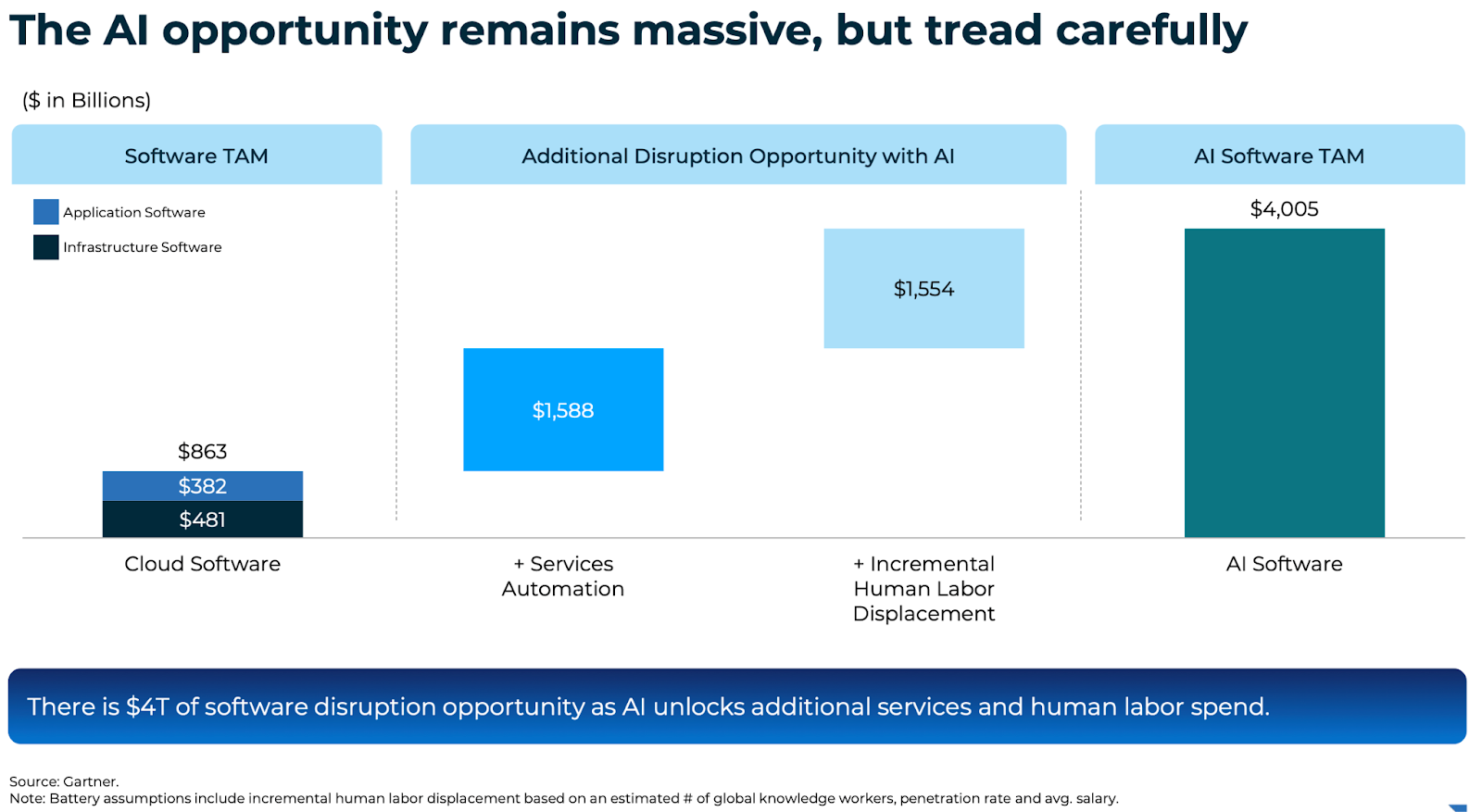
The emergence of AI agents represents part of a broader technological transformation that analysts believe could rival the mobile and cloud computing revolutions in scope and impact. According to Battery Ventures’ 2024 State of the OpenCloud report, the AI software TAM is worth ~US$4 trillion as it disrupts traditional software, services, and labour markets (Figure B).
Figure B: The Massive AI Market Opportunity
Source: Battery Ventures, State of the OpenCloud Nov 2024
The precise market sizing for agentic AI remains unclear due to the emergent nature of this technology. However, we note that the impact of AI agents extends beyond direct market size. Cloud providers are making unprecedented investments in AI infrastructure to support these emerging technologies. This infrastructure buildout provides the foundation for widespread adoption of AI agents across industries.
Going forward, it will be important to watch the pace of agentic AI technology adoption within enterprises as well as regulatory developments. While some regulations may stifle deployment, ultimately regulation developed in conjunction with industry leaders and other key stakeholders will likely create a more stable environment for long-term investment.
Conclusion
Agentic AI is a fundamental shift in enterprise technology moving beyond simple automation to create systems capable of autonomous, complex decision-making. While early adoption shows promising results, success will depend on several critical factors.
For investors evaluating opportunities in this space, key considerations include:
- The pace of enterprise adoption and deployment success rates
- Regulatory developments, particularly around autonomous decision-making
- Competition between incumbent SaaS providers and AI-first startups
- Infrastructure requirements and associated investment opportunities
The winners in this transition will likely be companies that can effectively bridge the gap between legacy systems and AI-driven operations, while addressing the practical challenges of enterprise data integration. We believe both established players as well as new AI-first players can win in this market. The opportunity also extends beyond direct AI agent providers to the broader ecosystem of companies providing essential infrastructure, security, and integration services. For investors, agentic AI represents a potentially transformative opportunity – but one that requires careful analysis of technological capabilities, business models, and go-to-market strategies.
At AlphaTarget, we invest our capital in some of the most promising disruptive businesses at the forefront of secular trends; and utilise stage analysis and other technical tools to continuously monitor our holdings and manage our investment portfolio. AlphaTarget produces cutting edge research and our subscribers gain exclusive access to information such as the holdings in our investment portfolio, our in-depth fundamental and technical analysis of each company, our portfolio management moves and details of our proprietary systematic trend following hedging strategy to reduce portfolio drawdowns. To learn more about our research service, please visit https://alphatarget.com/subscriptions/.
Autonomous driving technology is rapidly advancing, reshaping the landscape of transportation with its potential to enhance efficiency, convenience and safety on the roads.
The history of autonomous driving technology traces back to the mid-20th century, with early concepts appearing in the 1950s and 1960s. Initial developments were largely theoretical, but by the 1980s, more practical steps began to emerge. In 1986, Carnegie Mellon University’s NavLab project demonstrated a vehicle that could drive autonomously on highways.
The 2000s marked a significant leap with the advent of DARPA’s Grand Challenges, which spurred innovation by challenging teams to build autonomous vehicles capable of navigating complex environments. Google’s entrance into the field in 2009, with its self-driving car project (now Waymo), accelerated advancements, leveraging advanced sensors and AI to enhance safety and functionality. The 2010s brought increased industry investment, with major automotive manufacturers and tech companies investing heavily in autonomous vehicle technology.
As of 2024, self-driving vehicles, powered by sophisticated sensors, artificial intelligence, and machine learning algorithms, are progressively becoming more reliable and integrated into everyday use.
Fully autonomous Level 4 vehicles are already on the road in select regions, marking a significant milestone in the industry’s progress. Despite this achievement, technological hurdles, combined with regulatory and ethical challenges, continue to be obstacles on the road to large-scale deployment.
Levels of autonomy
The Society of Automotive Engineers (SAE) defines six levels of driving automation, from Level 0 to Level 5, each representing a different degree of autonomy in vehicles:
- SAE Level 1 (Driver Assistance): This level includes basic automation features such as adaptive cruise control or lane-keeping assistance. While the vehicle can assist with specific tasks, the driver is still responsible for most driving functions and must remain engaged.
- SAE Level 2 (Partial Automation): Vehicles at this level can control both steering and acceleration/deceleration simultaneously. However, the driver must remain actively involved, monitor the driving environment, and be prepared to take over if necessary. Tesla’s Autopilot and Full Self Driving (Supervised) are examples of Level 2 automation.
- SAE Level 3 (Conditional Automation): At this stage, the vehicle can handle all aspects of driving in certain conditions, such as highway driving, without driver intervention. The driver must be ready to take control if the system requests, but does not need to monitor the driving environment continuously.
- SAE Level 4 (High Automation): Vehicles at Level 4 can operate autonomously in their operational design domain (ODD) – specific conditions or areas where it is designed to operate such as campuses, dedicated routes within a city, or even an entire city. Within its ODD, no driver is required, and some Level 4 vehicles may not even have manual controls. Waymo operating in certain cities in the US is an example of Level 4 autonomy. Tesla’s Cybercab demonstrated within Warner Bros. Discovery’s Burbank California studio is another example of Level 4 autonomy.
- SAE Level 5 (Full Automation): At the highest level, the vehicle is fully autonomous in all conditions and environments. This represents autonomous driving with no ODD restrictions. As of 2024, there are no Level 5 autonomy solutions deployed anywhere in the world, and it remains (thus far) an elusive goal.
These levels represent a continuum of increasing automation, with Level 5 signifying the ultimate goal of fully autonomous driving.
Autonomous transport technology landscape
At the core of autonomous driving technology is artificial intelligence (AI) and machine learning (ML) which enable vehicles to perceive and navigate their surroundings without human intervention. These technologies process data from sensors to understand the vehicle’s environment, make real-time decisions, and adapt to changing conditions. Typically, machine learning models are trained on diverse datasets to improve their ability to recognise patterns and make real-time decisions. Over time, these models learn from new scenarios and edge cases, enhancing their performance and reliability. AI and ML enable autonomous vehicles to adapt to changing conditions, such as varying weather or unexpected obstacles, and continuously refine their driving strategies based on experience. This dynamic learning capability is essential for achieving the high level of flexibility and safety required for autonomous driving. Reinforcement learning also plays a crucial role in improving decision-making over time by simulating real-world driving scenarios and continuously optimising vehicle behaviour. As AI continues to advance, its role in ensuring safety, improving driving efficiency, and handling edge cases will become even more essential, making it a key driver of both technological innovation and long-term investment in the autonomous vehicle sector
In addition to AI, autonomous driving hardware is crucial for enabling vehicles to perceive their surroundings and make informed decisions. Here is an overview of the key components:
Ultrasonic Sensors
- Function: These are used primarily for close-range detection, such as parking assistance and low-speed manoeuvring. They emit sound waves and measure the time it takes for the echoes to return, helping detect nearby objects.
- Limitations: Limited range (usually a few metres) and low resolution make them less suitable for high-speed or long-range scenarios.
Radar (Radio Detection and Ranging)
- Function: Radar systems transmit radio waves and detect objects by analysing the reflected signals. They are effective in various weather conditions and can measure the speed and distance of objects. Radar systems are often used in adaptive cruise control and collision avoidance systems.
- Limitations: Radar typically has lower resolution compared to cameras and LiDAR, making it less effective at identifying and classifying objects.
Cameras
- Function: Cameras capture high-resolution visual data, allowing the system to detect lane markings, traffic signs, and recognize objects such as pedestrians and vehicles. Cameras are critical for tasks like lane-keeping, traffic sign recognition, and object classification
- Limitations: Performance can be affected by poor lighting conditions, glare, and inclement weather conditions such as rain or fog. They also require sophisticated algorithms for processing and interpreting the visual data.
LiDAR (Light Detection and Ranging)
- Function: LiDAR systems emit laser beams and measure the time it takes for the light to return after hitting an object. This allows the creation of detailed 3D maps of the environment, which are crucial for precise localization, obstacle detection, and path planning.
- Limitations: LiDAR is typically more expensive and less effective in certain conditions (e.g., heavy rain or snow) compared to other sensors. The data processing requirements are also high.
In an autonomous driving system, these hardware components are often used in combination to complement each other’s strengths and mitigate their weaknesses. This sensor fusion approach enhances the vehicle’s ability to perceive its environment accurately and operate safely under a wide range of conditions.
Autonomous driving technology often relies on a sophisticated integration of various systems to ensure safe and efficient navigation. Many current implementations use High-definition (HD) mapping in their solution. These maps provide detailed and precise representations of roadways, including lane markings, traffic signs, and topographical features. They offer a static reference against which real-time data from sensors can be compared, enabling vehicles to understand their precise location and navigate complex environments with high accuracy. The rich detail of HD maps enhances a vehicle’s ability to anticipate road conditions and obstacles, thereby improving decision-making and safety.
Vehicle-to-vehicle (V2V) and vehicle-to-everything (V2X) communication frameworks have also been proposed to further augment the capabilities of autonomous driving systems. V2V communication allows vehicles to exchange information about their speed, direction, and position, helping them coordinate movements and avoid collisions. For instance, if one vehicle suddenly brakes, nearby vehicles can receive this information in real-time and adjust their behaviour accordingly. V2X communication extends this concept to include interactions with infrastructure elements like traffic signals and road signs, as well as other entities such as pedestrians and cyclists. As of 2024, V2V/V2X technology is primarily limited to pilot projects and specific vehicle models, rather than being a standard feature across the automotive industry.
Hurdles on the road to Full Autonomy
The path to fully autonomous (“Level 5”) driving involves a complex and incremental journey, marked by technological advancements, rigorous testing, and gradual integration into everyday transportation.
One key concept in this progression is the “rollout,” which refers to the phased introduction of autonomous driving features. Initially, these features are introduced in a limited scope, often focusing on specific driving environments such as highways or well-mapped urban areas. This phased approach allows for the refinement of technology and safety measures through real-world testing and user feedback.
The “March of Nines” is a framework used to describe the incremental safety improvements in autonomous driving technology. It measures safety levels using reliability metrics such as the number of accidents or incidents per billion miles driven. Each “nine” added to the reliability rate (e.g., 99% to 99.9%) represents a significant risk reduction, with the ultimate goal being near-zero accidents.This gradual approach helps ensure that each step forward is backed by rigorous testing and validation, mitigating risks as the technology progresses.
In addition to the technological hurdles towards achieving Level 5 autonomy, there are several other important considerations, which we discuss below.
Public Perception of Autonomous Driving: Public perception of autonomous driving is a mixed landscape of excitement and scepticism. Many people are enthusiastic about the potential benefits, such as reduced traffic accidents, increased mobility for the elderly and disabled, and the convenience of hands-free driving. However there are significant concerns about safety, reliability, and trust in the technology. High-profile accidents involving autonomous vehicles have fueled doubts and fears, leading to calls for more transparency and stringent testing before widespread adoption. Building public confidence involves not only demonstrating the technology’s safety and effectiveness but also addressing these concerns through clear communication and ongoing education.
Security Considerations: Security is a critical concern for autonomous driving systems, given their reliance on complex software and data communications. Protecting vehicles from cyberattacks is paramount, as vulnerabilities could lead to unauthorised control or manipulation of the vehicle’s systems, posing severe safety risks. Robust cybersecurity measures, including encryption, secure software updates, and regular vulnerability assessments, are essential to safeguard both the vehicle’s internal systems and the communication networks they rely on. Additionally, ensuring that data privacy is maintained is crucial to prevent misuse of sensitive information collected during vehicle operation.
Ethical/Societal Implications: The rise of autonomous driving technology raises significant ethical and societal questions. Key issues include the decision-making algorithms used in critical situations — such as how a vehicle should react in unavoidable accident scenarios — and the potential impact on employment, particularly for drivers in sectors like trucking and ride-hailing. There are also concerns about equity and accessibility, and we must consider whether the benefits of autonomous driving will be widely distributed or if they will exacerbate existing social inequalities? Addressing these ethical challenges involves creating transparent guidelines and engaging diverse stakeholders in discussions about the technology’s broader implications.
Regulatory and Legal Issues: Navigating the regulatory and legal landscape for autonomous driving is complex and evolving. Governments and regulatory bodies are tasked with developing standards and guidelines that ensure the safety and efficacy of autonomous vehicles while fostering innovation. This involves creating frameworks for testing and certification, defining liability in the event of accidents involving autonomous vehicles, and establishing data privacy regulations. The lack of uniformity in regulations across different regions can also create challenges for manufacturers and developers seeking to deploy autonomous vehicles on a global scale. Effective regulation requires collaboration between policymakers, industry leaders, and technology experts to create a balanced approach that supports technological advancement while protecting public safety and interests.
Sizing the opportunity
Autonomous vehicles will potentially impact multiple trillion-dollar markets including transportation, logistics, and urban infrastructure. This potential stems from fundamental changes to cost structures and asset utilisation across these sectors, although the early stage of the technology makes precise market sizing challenging.
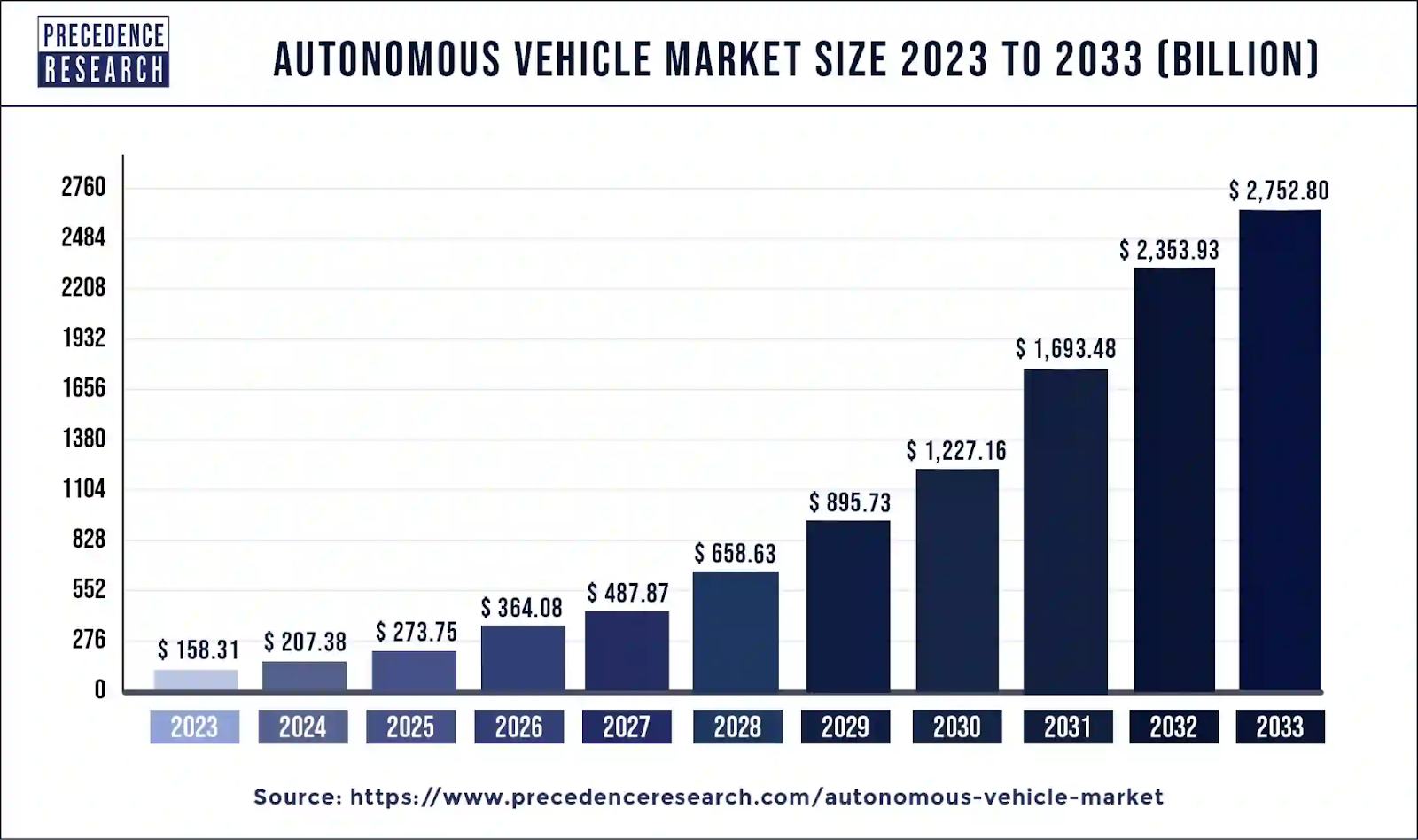
Since autonomous technologies are still in the very early stages of their rollout, the estimates for total addressable market (TAM) vary significantly across forecasts. For instance, according to Fortune Business Insights, the global autonomous vehicle market was valued at just over US$1.9 trillion in 2023 and is expected to grow to US$13.6 trillion by 2030 (representing a CAGR of 32.3%)! On the other end of the spectrum, Precedence Research has a relatively conservative estimate for the Autonomous Vehicle Market at US$158.3 billion in 2023, set to grow to US$2.75 trillion by 2033 (Figure A).
Figure A: Autonomous Vehicle Market Size, 2023 to 2033
Source: Precedence Research
Although the autonomous driving TAM forecasts vary depending on the source, our work suggests that this is indeed a very large opportunity encompassing both passenger and freight mobility.
In this regard, consider just the US trucking market. According to the American Trucking Association, in 2022 trucks moved 11.4 billion tons of freight and generated more than US$940 billion in freight revenue!
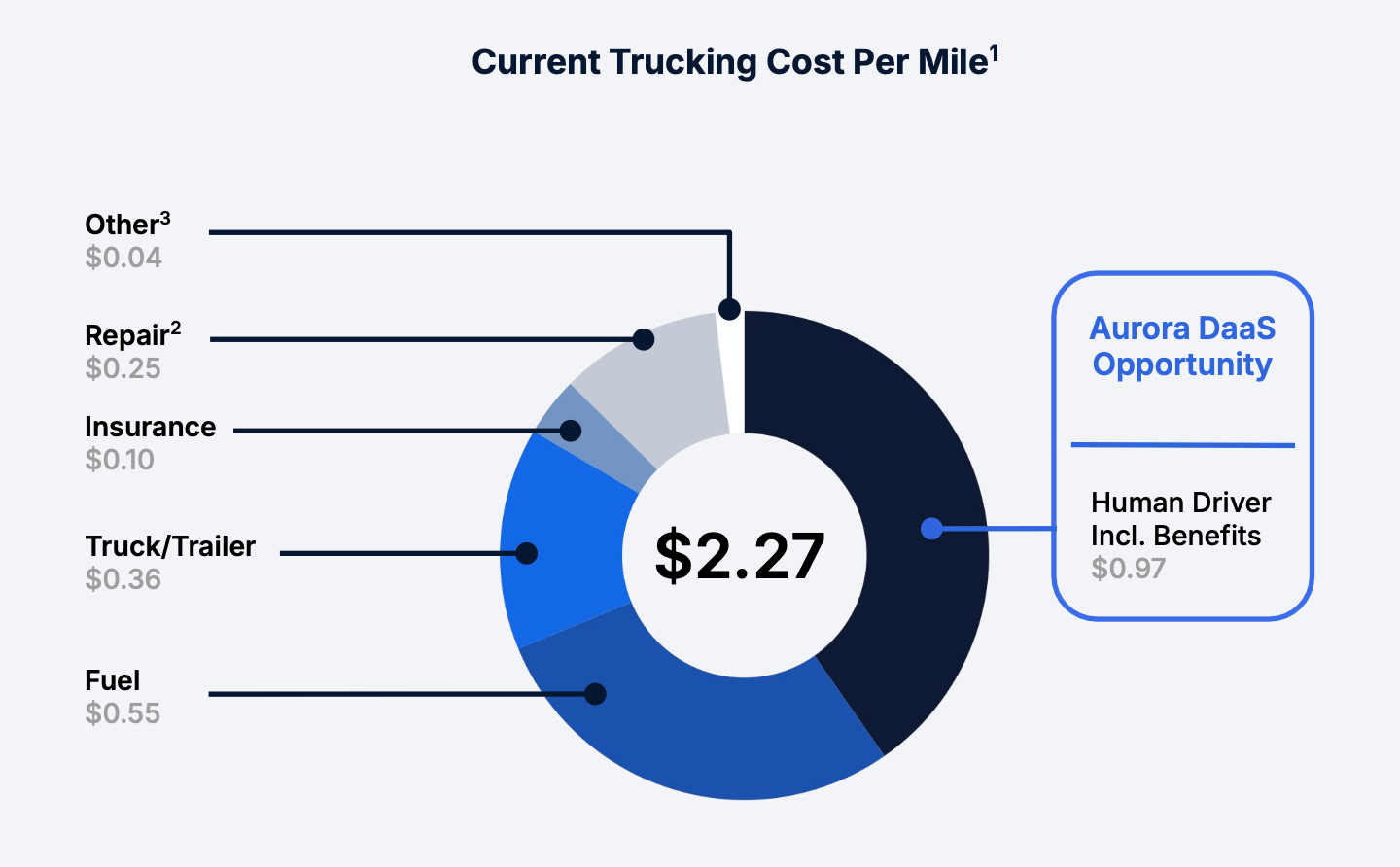
Autonomous trucking software developer Aurora pegs the current cost per mile at ~US$2.27, with the human driver component being the single largest cost at US$0.97 (Figure B). The potential for autonomous technology to eliminate this cost while potentially increasing fleet utilisation through 24/7 operation capability presents a clear economic incentive for widespread adoption.
Figure B: Cost Per Mile for Trucking in the US
Source: Aurora July 2024 Investor Presentation
Similarly, ride-hailing giant Uber’s financials also demonstrate the latent potential of autonomy. In Q3 2024, Uber’s mobility gross bookings were US$21 billion. After paying drivers, the company’s revenue for the quarter was US$6.4 billion. In other words, approximately 70% of the gross bookings were for driver-related costs (i.e., wages, vehicle costs, fuel etc). Similar to the trucking statistics above, the single largest cost factor in ride hailing was driver related.
According to various estimates, the average cost (paid by riders) per mile is in the US$1 to US$3 range. Currently, autonomous vehicle attempts are targeting costs in the sub US$1 per mile range. At the unveiling of Tesla’s Cybercab (the no-pedal 2-seat specialised robotaxi), Musk indicated that Cybercab at scale will probably cost US$0.30 to US$0.40 per mile (inclusive of taxes), which is well under the US$1 cost for a city bus.
Given the glaring cost advantages, it is no surprise that this is a race that is attracting so much interest. Furthermore, beyond impacting the transportation and freight markets, we expect autonomy to have broader implications, including on personal vehicle ownership, insurance, and urban planning. For instance, as autonomous vehicles become more common, consumers may rely less on personal car ownership, favouring shared autonomous vehicles instead. This could impact vehicle sales, especially in urban areas.
Infrastructure may need to adapt to accommodate autonomous vehicles, including the integration of smart roads, sensors, and traffic systems. This could lead to new investments in highway systems and urban design to ensure safe interaction between human-driven and autonomous vehicles. Autonomous vehicles could reduce the need for parking spaces, particularly in urban areas, leading to repurposing of land previously allocated for parking lots and garages. This could also affect real estate values and urban density.
Autonomous driving will shift the focus of liability from human drivers to manufacturers and software providers. Insurance companies may need to develop new products to cover the risks associated with software failures, cybersecurity breaches, and product liability claims.
As autonomous vehicles are expected to reduce human error, the number of accidents could decrease, which may lower overall premiums but also reduce the volume of claims handled by insurers.
Insurers will likely need to adjust to new regulations and policies governing autonomous vehicle operation, while pricing models may shift towards covering technology-related risks rather than individual driver behaviour.
In summary, although the rise of autonomous driving will create opportunities for innovation, it will also force industries to adapt, as traditional models of transportation, logistics, infrastructure, and insurance get disrupted.
Conclusion
The autonomous vehicle market is rapidly evolving, fueled by significant investments and technological advancements that have sparked growing consumer and investor interest. Yet, substantial challenges remain, including regulatory hurdles, insurance complexities, and safety concerns, especially in regions with limited infrastructure or minimal traffic laws. These barriers are particularly pronounced in developing markets, where the absence of consistent road infrastructure and traffic regulations may slow adoption.
Despite these obstacles, the potential benefits of autonomous vehicles—from enhanced safety and cost savings to reduced congestion—continue to drive the industry forward. Key players in automotive, technology, and mobility sectors are actively shaping the future of transportation, creating fresh opportunities for innovation, growth, and investment in this high-risk, high-reward space. While this remains a nascent industry, we believe autonomous driving presents a major opportunity.
The autonomous driving industry offers a highly attractive, high-margin, recurring revenue model. Providers of autonomous driving technologies are likely to licence their software to automotive OEMs and fleet operators, creating a lucrative business through ongoing royalties and partnerships. In addition to licensing, companies are expected to own and operate their own robotaxi fleets, which will also bring in high-margin, recurring revenue. By directly managing these fleets, these companies will capture a significant share of the growing mobility-as-a-service market, generating income through ride-hailing services while minimising operational costs. This combination of technology licensing and fleet ownership positions autonomous driving companies for long-term, scalable growth and significant profitability. Following extensive research, we have invested in what we see as the most promising companies positioned to lead this transformative shift.
At AlphaTarget, we invest our capital in some of the most promising disruptive businesses at the forefront of secular trends; and utilise stage analysis and other technical tools to continuously monitor our holdings and manage our investment portfolio. AlphaTarget produces cutting-edge research and subscribers to our research gain exclusive access to information such as the holdings in our investment portfolio, our in-depth fundamental and technical analysis of each company, our portfolio management moves and details of our proprietary systematic trend following hedging strategy to reduce portfolio drawdowns.
To learn more about our research service, please visit https://alphatarget.com/subscriptions/.
Cybersecurity is an umbrella term for a broad range of technologies and IT practices designed to protect computing systems, applications, networks, and data from unauthorised access, data breaches, and attacks.
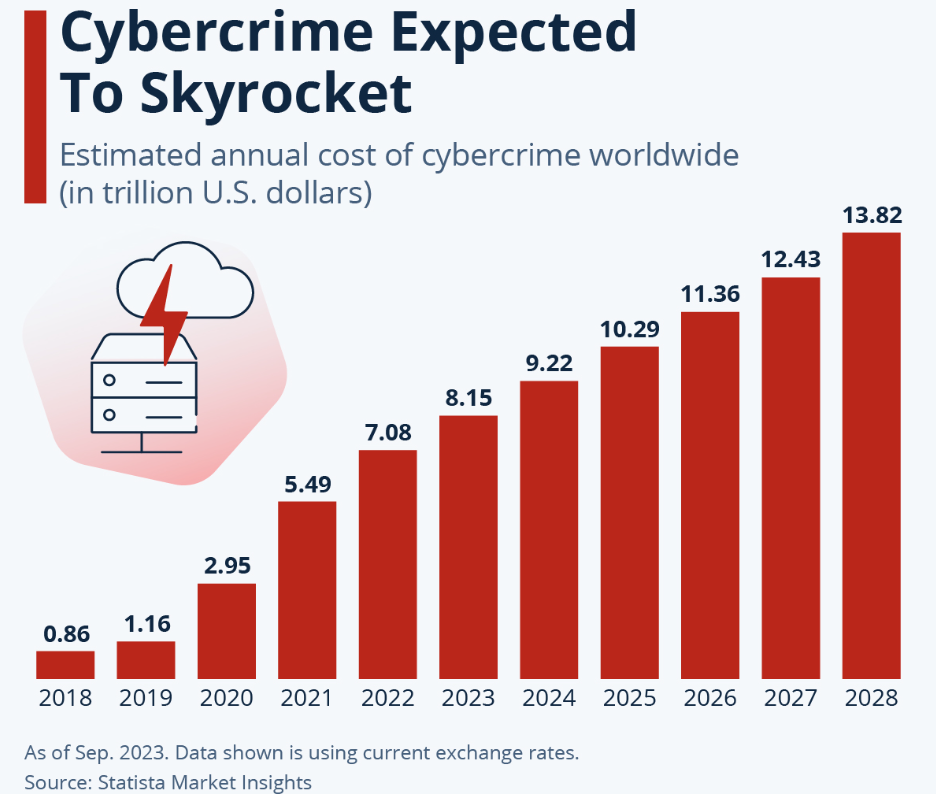
In today’s interconnected world, all businesses need to have a cybersecurity plan to defend against, detect, and respond to cyber threats in order to maintain the integrity and availability of digital assets. After all, the stakes are high as even a single breach can be costly. IBM’s Cost of a Data Breach Report 2024 recently reported the global average cost of a data breach reached US$4.88 million in 2024, up 10% over the prior year. According to Statista, the global cost of cybercrimes is expected to be a staggering US$13.82 trillion by 2028, up from $860 billion in 2018. (Figure A)
Figure A: The cost of cybercrime
Source: Statista
The escalation in cyberattacks can be attributed to several factors. Hostile state actors, organised criminal syndicates, and opportunistic hackers are all ramping up their activities. Exponential growth of digital infrastructure – including the proliferation of connected devices – has expanded the surface area available to malicious actors, thereby making it easier for them to find vulnerabilities. The COVID-19 pandemic accelerated this trend, with the FBI reporting a 300% spike in cybercrime since the onset of the pandemic. According to the Whitehouse’s National Cybersecurity Strategy document, state-sponsored attacks have also become more prevalent, with China, Russia, Iran, and North Korea noted to be “aggressively using advanced cyber capabilities to pursue objectives that run counter to our interests.”
Moreover, the emergence of ransomware as a service (RaaS) has lowered the barrier to entry for cybercriminals, particularly as the broader adoption of cryptocurrencies has enabled attackers to monetise their exploits anonymously. According to the recently released Zscaler ThreatLabs 2024 Ransomware Report, ransomware attacks foiled by the Zscaler cloud increased 18% year over year globally in the 12 months ended April 2024, including a staggering 93% increase in attacks against U.S.-based organisations (where nearly 50% of all ransomware attacks occurred).
Overall, inadequate cybersecurity measures, combined with exponential digitisation, has created a perfect storm for the proliferation of cyberattacks across all sectors of the economy. It is therefore not a surprise that robust cybersecurity solutions have evolved into a critical business imperative – one that is becoming ever more important with each passing day.
Common Cyber Threats
Next we will discuss some of the most common forms of cyber threats:
Malware
Malware (short for malicious software) is a category of programs designed to infiltrate and exploit computing devices such as laptops, smartphones, and servers. There are various types of malware:
- Viruses are self-replicating programs that spread by attaching to other files or programs, often propagating through email attachments or infected websites.
- Trojans are malicious software that are disguised as legitimate and trick users to willingly install them on their devices; once installed they open a backdoor for threat actors. Trojans are common amongst pirated software and illegitimate mobile apps.
- Spyware operates covertly in the background, gathering sensitive information without the user’s knowledge and potentially leading to identity theft or financial fraud.
- Ransomware encrypts files or locks computer access, demanding payment (often in cryptocurrency) for the decryption key.
One of the largest known malware attack was the WannaCry ransomware that occurred in 2017 and affected over 200,000 computers across 150 countries, causing billions of dollars of damage. WannaCry exploited a vulnerability in Windows machines (that weren’t updated with the latest security patches) to encrypt users’ files; the attackers demand payment in Bitcoin for decrypting the files. Among the high-profile organisations impacted was the UK’s National Health Service, which resulted in widespread disruption across the UK’s national health services.
Zscaler’s ThreatLabz 2024 Ransomware Report more recently highlighted a record-breaking $75 million ransomware payment made by an organisation to the Dark Angels ransomware group – nearly double the previous highest publicly known ransomware payout – marking a massive windfall that will likely only encourage other bad actors to ramp their own illicit efforts.
Distributed Denial of Service (DDoS) Attacks
DDoS attacks harness networks of compromised computers (“botnets”) to overwhelm a target service or network with the goal of making it inaccessible to its users. These attacks come in various forms such as flooding a system with requests, exploiting protocol-level vulnerabilities, or targeting specific application layer services. The primary goal of these attacks is to disrupt service availability, thus potentially causing financial and/or reputation damage to the impacted organisation.
There have been a number of high-profile DDoS attacks in recent years. In September 2017, Google was the victim of a massive attack that manipulated 180,000 web servers to send their responses to Google. This attack reached a colossal 2.54Tbps. The following year, GitHub was hit by an attack that peaked at 1.3Tbps, with perpetrators leveraging the amplification effect of a popular database caching system. In February 2020, Amazon Web Services (AWS) reported mitigating a staggering 2.3 Tbps DDoS attack, where malicious actors exploited hijacked Connection-less Lightweight Directory Access Protocol (CLDAP) web servers. These high-profile incidents underscore the evolving and ever-present nature of DDoS threats, driving continued innovation in mitigation strategies and technologies within the cybersecurity industry.
Identity-based Attacks
Identity-based attacks often exploit stolen or weak passwords to gain unauthorised access to systems. Common forms include credential stuffing, where attackers use automated tools to test large numbers of stolen username/password combinations across various websites, and password spraying, which attempts to access numerous accounts using a few commonly used passwords.
Identity attacks can have far-reaching implications. In 2012, 6.5 million hashed passwords were stolen from LinkedIn and later cracked. As users tend to reuse passwords, in 2016 Netflix observed a surge in fraudulent logins thanks to perpetrators leveraging the LinkedIn leak.
Organisations are mitigating against these risks by adopting multi-factor authentication (MFA) and passwordless authentication models such as biometric logins.
Code Injection Attacks
Code injection attacks involve inserting malicious code into vulnerable applications to alter their function or gain unauthorised access to systems and data. Common types of attacks include threat actors inserting malicious SQL code into input fields (SQL injection), malicious scripts on websites (Cross-site scripting), and remote code execution. These attacks can lead to data breaches, system outages, and financial loss.
One infamous example of this type of attack was the breach experienced by Equifax – one of the world’s largest credit reporting agencies – in 2017. Attackers discovered that one of Equifax’s servers was running an unpatched version of Apache Struts software, and they leveraged the vulnerability to gain access to sensitive data of 147 million Americans. In 2019, Capital One fell victim to a major data breach affecting over 100 million customers, which was facilitated by a server-side request forgery (SSRF) attack, a form of code injection, and a weakness (at that time) in Amazon Web Services’ EC2 service infrastructure.
Secure coding practices and regular patching of IT infrastructure can go a long way toward mitigating these risks.
Social Engineering Attacks
Social engineering attacks exploit human psychology to manipulate individuals into divulging confidential information or performing actions that compromise security. These attacks often rely on creating a false sense of trust or urgency, exploiting human tendencies rather than technical vulnerabilities.
Phishing is the most prevalent form of social engineering attacks. Phishing commonly occurs via emails, text messages, or websites that appear to be legitimate (but are not), with the victim falling for the masquerade and willingly providing sensitive information to the attacker. The goal is usually to steal credentials, financial information, or install malware on the victim’s device. While phishing attacks generally cast a wide net, “whaling” targets high-value individuals specifically.
Other common social engineering approaches include baiting and voice phishing.
As social engineering attacks become more prevalent and sophisticated, organisations will need to consider the human-in-the-loop factor when designing security measures. In particular, enterprises that intertwine technical defences with human-oriented security measures are likely going to be more successful at thwarting threat vectors than those that primarily focus on the former.
Evolution of Enterprise Cybersecurity
In the early days of the Internet, security was mostly limited to protocol design and access control. The late 1980s saw the emergence of antivirus software, which perhaps can be considered to mark the beginning of dedicated security software solutions.
The consideration of IT infrastructure security gained prominence with the invention of the World Wide Web (“Web”) and the widespread adoption of the Internet starting in the 1990s. As businesses started deploying their corporate networks, the idea of building a defensive perimeter (or “moat”) around the corporate IT infrastructure (or “castle”) started to take hold. The resulting birth of castle-and-moat security saw firewalls emerge as the bulwark of the security measures.
Initially, firewalls were packet filters between the trusted internal and untrusted external network. With cyberthreats becoming more sophisticated, the mid-1990s saw adoption of intrusion detection systems (i.e., security appliances or software that monitor network traffic for suspicious activity and policy violations). As technology matured, next-generation firewalls incorporated solutions such as deep packet inspection and intrusion detection systems.
The increase in threats and their sophistication resulted in the birth of security information and event management (SIEM) systems in the early 2000s. SIEM systems collect and analyse security related event data from across an organisation’s IT infrastructure. Typical SIEM systems include capabilities such as log management, event correlation and analytics, and automated incident response capabilities. These capabilities enable enterprise security teams to identify anomalies and deploy automated threat remediation strategies.
Then, the late 2000s saw another paradigm shift caused by the smartphone revolution and the widespread adoption of cloud computing. AWS launched its first cloud services in 2006, and the iPhone was introduced in 2007. While these technologies transformed how people lived and worked, the shift also dramatically increased the attack surface (e.g., cloud and mobile technologies introduced new apps, anytime anywhere access, distributed computing and storage infrastructure). These developments pushed forward advancement of identity management solutions, introduction of new cloud security frameworks, development of cloud-native security solutions and mobile device management tools.
For instance, with increasing complexity in technology stacks, we saw cloud-based identity and access management (IAM) solutions gain ground. IAM solutions help manage digital identities and user access to data, systems, and resources. It includes features like single sign-on (SSO), multi-factor authentication (MFA) and privileged access management (PAM).
Moreover, with no clear delineation of the corporate perimeter in the cloud computing world, a new Zero-Trust security framework started to take hold in the 2010s. Unlike traditional perimeter-based security models, Zero-Trust assumes that threats exist both inside and outside traditional network boundaries. This approach requires all users, whether inside or outside the organisation’s network, to be continuously validated before being granted access to applications and data.
Ideas such as Cloud Access Security Brokers (CASBs) emerged, providing visibility and control over cloud applications. Cloud Security Posture Management (CSPM) tools also gained prominence as organisations focussed on assessing and managing their cloud security risks.
More recently, AI and machine learning are being leveraged to detect and respond to threats more quickly and effectively, enabling predictive security measures. To cope with the sheer volume of security events, organisations are increasingly turning to security orchestration, automation, and response (SOAR) platforms. Extended Detection and Response (XDR) has evolved as a framework for unifying endpoint, network, and cloud data to provide holistic protection and faster threat detection and response.
It is important to realise that cybersecurity is an arms race of sorts. Cybersecurity specialists are continually working towards securing systems, while threat actors are always on the look for new sophisticated attacks – with both increasingly leveraging AI and machine learning in their respective efforts. In this race, only those companies that have the tenacity to stay at the forefront of innovation can thrive over the long-term.
Cybersecurity is a good business
Like enterprise software companies, cybersecurity businesses often exhibit attractive characteristics that make them compelling investment opportunities.
The market for cybersecurity is rapidly expanding, propelled by the increasing frequency and sophistication of cyber threats. This growth potential makes this sector particularly interesting to investors seeking high-growth technology exposure.
Further, modern security solutions are offered as subscription-based services, thus providing predictable and recurring revenue streams, a trait favoured by investors. In addition, cloud-based cybersecurity solutions can easily scale to meet growing customer demands without significant capital investments. In other words, modern cybersecurity businesses can be asset-light compounders.
It is also important to note that security solutions often fall in the “must have” and not in the “good to have” category. Thus, even in difficult macroeconomic conditions, cybersecurity spending is mission critical and likely to be impacted to a lesser extent than other businesses.
There are many listed behemoths and several up-and-coming innovative cybersecurity players in the public markets. Enterprise software behemoth Microsoft offers a comprehensive range of security solutions, including identity and access management solutions, unified XDR and SIEM platforms, as well as firewall and DDoS protection services. Networking giant Cisco offers a wide range of networking and security solutions, including endpoint security and cloud security, and recently bolstered its position with the completion of its acquisition of business and web analytics leader Splunk in 2024.
Among the security specialists, Palo Alto Networks is a veteran security vendor that has its roots in selling hardware security appliances. The company has more recently migrated to selling cloud-based security solutions.
There are also many next-generation, rapidly growing cybersecurity pure-plays to consider.
While cybersecurity offers plenty of growth potential, investors should not overlook the risks. The lucrative nature of this industry results in intense competition. Technological shifts can also cause dislocation and alter competitive dynamics. Finally, the attractive nature of the industry tends to push valuations up, which might crimp investors’ future returns.
Sizing the opportunity
The cybersecurity market is large and rapidly growing, thrust forward by factors such as digital transformation and the increasing sophistication of threats.
According to Precedence Research, the global cybersecurity market is expected to compound at 12.6% annually over their forecast period, 2024 to 2034, reaching US$878 billion by 2034 (Figure B). According to Grand View Research, IT investments in 5G, Internet of Things (IOT), and the Bring Your Own Device (BYOD) trend is expected to significantly increase the number of endpoints, which is likely to be beneficial to businesses focussed on cloud security solutions.
Figure B: Cybersecurity market size forecast
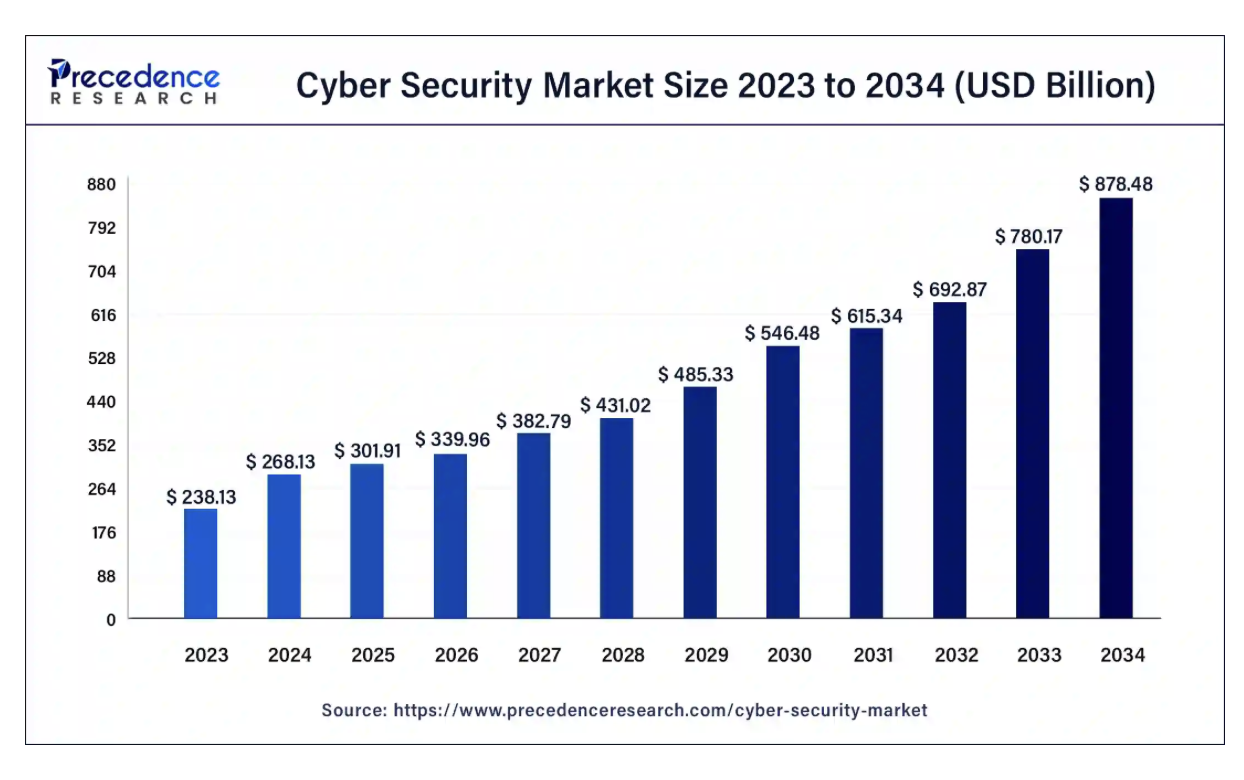
Source: Precedence Research
In our view, as cyber threats continue to evolve and proliferate, high-quality cybersecurity businesses with innovative solutions, scalable platforms, and efficient operational models are well-positioned to thrive. These companies are likely to be at the forefront of developing cutting-edge solutions to combat emerging cyber threats, thereby strengthening their market positions and financial performance. However, as with any rapidly evolving industry, not all cybersecurity businesses are created equal, and there will inevitably be winners and losers.
Unlike certain markets that tend to be of the “winner takes all” kind or support only a few big winners, we think cybersecurity has the opportunity to support multiple winners. This is because enterprises often adopt a layered security model, implementing a variety of security solutions for different parts of their IT infrastructure. A layered approach can reduce vulnerability as malicious actors need to breach multiple defences to wreak havoc. Further, this mindset often results in companies becoming specialists in their own chosen arena.
The dynamic threat landscape, rapid technological advancements, and shifting regulatory environments mean that some companies in this space may struggle to keep pace or fail to differentiate their offerings effectively. Therefore, investors will need to carefully evaluate potential cybersecurity investments before committing their capital, considering factors such as rate of technological innovation, adaptability to new threats, scalability of solutions (including efficiency of go-to-market strategies), and the company’s track record in protecting against breaches. After carrying out in-depth research, our firm has identified and invested in the most promising, rapidly growing cybersecurity companies in the public markets.
At AlphaTarget, we invest our capital in some of the most promising disruptive businesses at the forefront of secular trends; and utilise stage analysis and other technical tools to continuously monitor our holdings and manage our investment portfolio. AlphaTarget produces cutting edge research and those who subscribe to our research service gain exclusive access to information such as the holdings in our investment portfolio, our in-depth fundamental and technical analysis of each company, our portfolio management moves and details of our proprietary systematic trend following hedging strategy to reduce portfolio drawdowns.
To learn more about our research service, please visit https://alphatarget.com/subscriptions/.
In the age of digital transformation, the influence of software is pervasive and undeniable. As technology continues to advance at an unprecedented pace, software is revolutionising traditional business models and redefining customer experiences. From e-commerce to finance, manufacturing to transportation, industries across the board are being reshaped by the transformative power of software.
The appetite for software is insatiable and enterprise software, cloud software, and Software-as-a-Service (SaaS) markets are each playing their part in the digitalisation of businesses. Together, they represent critical pieces in companies’ efforts to efficiently manage virtually every aspect of their businesses and often provide mission critical functions.
Before we delve deeper into how we think about those opportunities – and for perspective on how they fit together – here is a quick breakdown of each market:
Enterprise Software
Enterprise software is designed to meet the needs of organisations rather than individual users. These applications are complex and scalable, and integrate with other software and network configurations on a large scale. They serve a variety of business functions such as enterprise resource planning (ERP), customer relationship management (CRM), supply chain management (SCM), cybersecurity, observability, and data warehousing. Companies use enterprise software to manage vast amounts of data, streamline their operations, support decision-making and enhance productivity across multiple departments.
Cloud Software
Cloud software refers to applications that are hosted on remote servers and accessed over the internet, which are maintained by external vendors rather than the users themselves. In contrast to old on-premises models, cloud software allows for flexibility, scalability, and cost efficiency as it eliminates the need for organisations to purchase, run, and maintain physical servers and other on-premises infrastructure. Cloud software can be delivered through several models including Infrastructure-as-a-Service (IaaS), which provides virtualised computing resources like servers, storage, and networking; Platform-as-a-Service (PaaS), which offers a complete platform for developing, testing, and deploying applications; and Software-as-a-Service (SaaS).
Software-as-a-Service (SaaS)
SaaS is one of the most significant subsets of the cloud computing market. It is a software distribution model in which applications are hosted by third-party providers and made available to customers over the internet. Unlike traditional software that requires a license purchase and installation on individual machines, SaaS products are typically subscription or usage based and centrally hosted. This means users can access software and its functions remotely from any device with internet connectivity. SaaS offers numerous advantages, including lower upfront costs, reduced time to benefit, high scalability, and automatic updates.
Many enterprise software providers have already transitioned part or all of their offerings to the cloud, capitalising on the cloud’s scalability and operational efficiency to better serve large organisations. Similarly, the rise of SaaS over the past two decades has reshaped how businesses think about software expenditure and management, shifting from capital-intensive software ownership to more operational expense models with ongoing subscriptions.
These markets continue to grow as businesses increasingly rely on digital solutions to manage their operations, interact with customers, and compete in today’s global economy. The push toward digital transformation, accelerated by factors like remote work trends and the global scaling of businesses, further drives the demand for sophisticated enterprise software solutions, robust cloud service platforms, and accessible SaaS applications.
Cloud-based software-as-a-service models are not just good for enterprise end users; they have also ushered in an era of superior software businesses characterised by higher recurring revenues, sticky business models, stable cash flows, and lower cyclicality.
Current state of the industry
The software industry is currently experiencing a period of rapid growth and transformation. With the increasing reliance on digital technologies across various sectors, software has become a critical component of modern businesses and everyday life. The industry is driving innovation in areas such as artificial intelligence, cloud computing, blockchain, and cybersecurity.
Open-source software is thriving, fostering collaboration and community-driven development.
The industry is facing challenges such as cybersecurity threats, privacy concerns, and the need to address ethical considerations in emerging technologies. Overall, the dynamic software industry is evolving, shaping the way humans live, work, and play.
Over the past decade, the enterprise software industry has experienced rapid growth driven by increasing demand for integrated solutions across every aspect of a business’ operations.
Gartner research indicates that over the past several years, the global enterprise software market has enjoyed solid mid-double-digit percent growth (ranging between 11% and 16%), buoyed in part by initiatives to increase productivity during the COVID-19 pandemic.
According to Precedence Research, the worldwide software market grew to US$659 billion in 2023 with North America responsible for 44% of the total spend, followed by Europe (27%) and Asia Pacific (24%). It is interesting to note that the software market is expected to continue growing to US$1.789 trillion by 2032, representing a CAGR of 11.74% (Figure 1).
Figure 1: Evolution of the worldwide software market
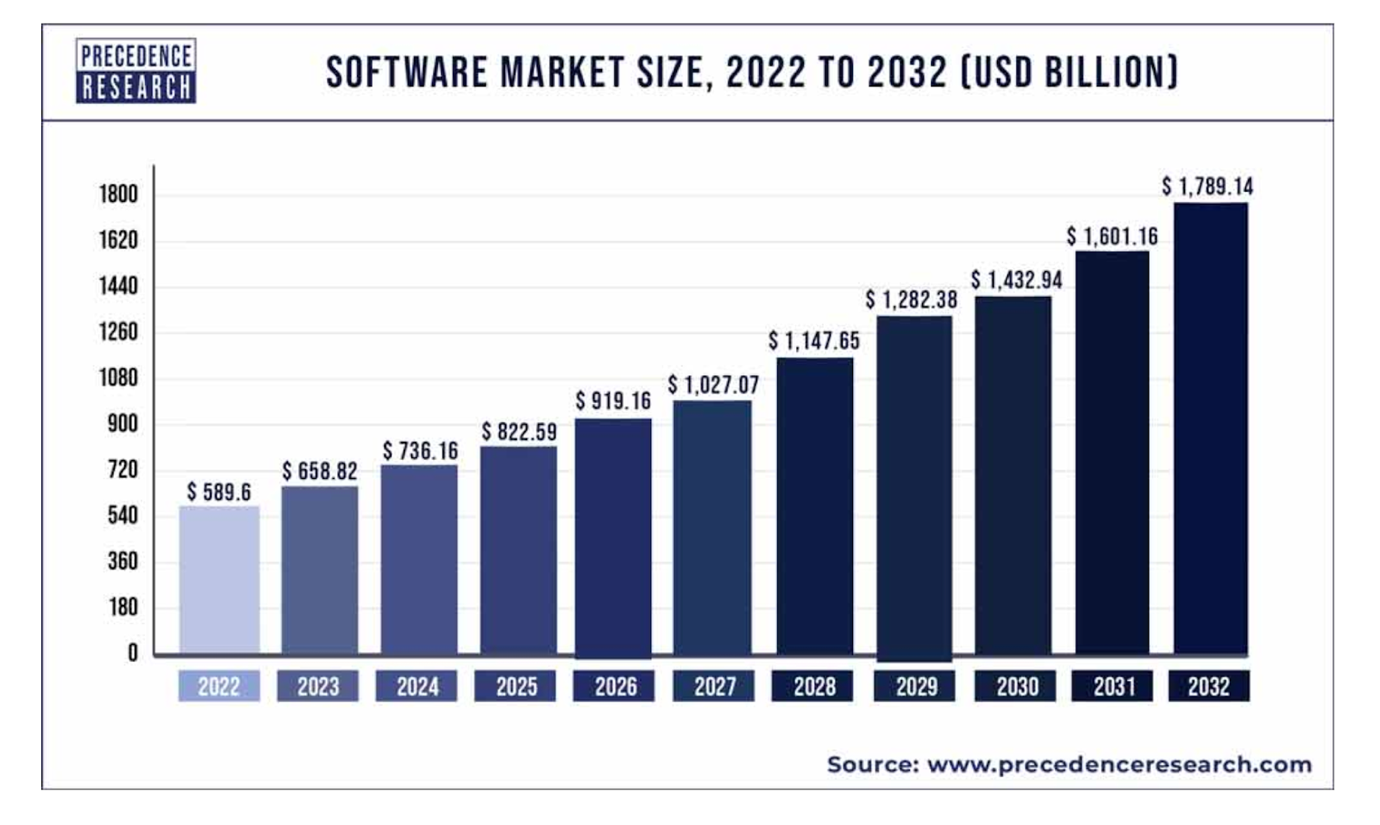
Source: Precedence Research
In 2022, on-premises software deployments still represented more than half of global enterprise software spending, highlighting the significant opportunity remaining for software companies to capitalise on the industry’s ongoing transition away from on-premises solutions and toward cloud-based offerings.
With more than half the world’s enterprise workloads still on-premises, the SaaS industry is expected to grow at a rapid clip as enterprises continue to migrate to the cloud. Today, the enterprise software and cloud/SaaS markets are dominated by several key players that have played pivotal roles in shaping its direction and technological advancements.
In 2022, the top five vendors — Microsoft, Oracle, Amazon, Salesforce and SAP — captured 34% market share, whereas the next five vendors — IBM, Adobe, Google, VMware and Cisco — held 11% market share.
In the Infrastructure-as-a-Service (IaaS) space, Amazon Web Services, Microsoft Azure, and Google Cloud dominate the industry and command decisive leadership positions (Figure 2).
Figure 2: Leaders in Infrastructure-as-a-Service
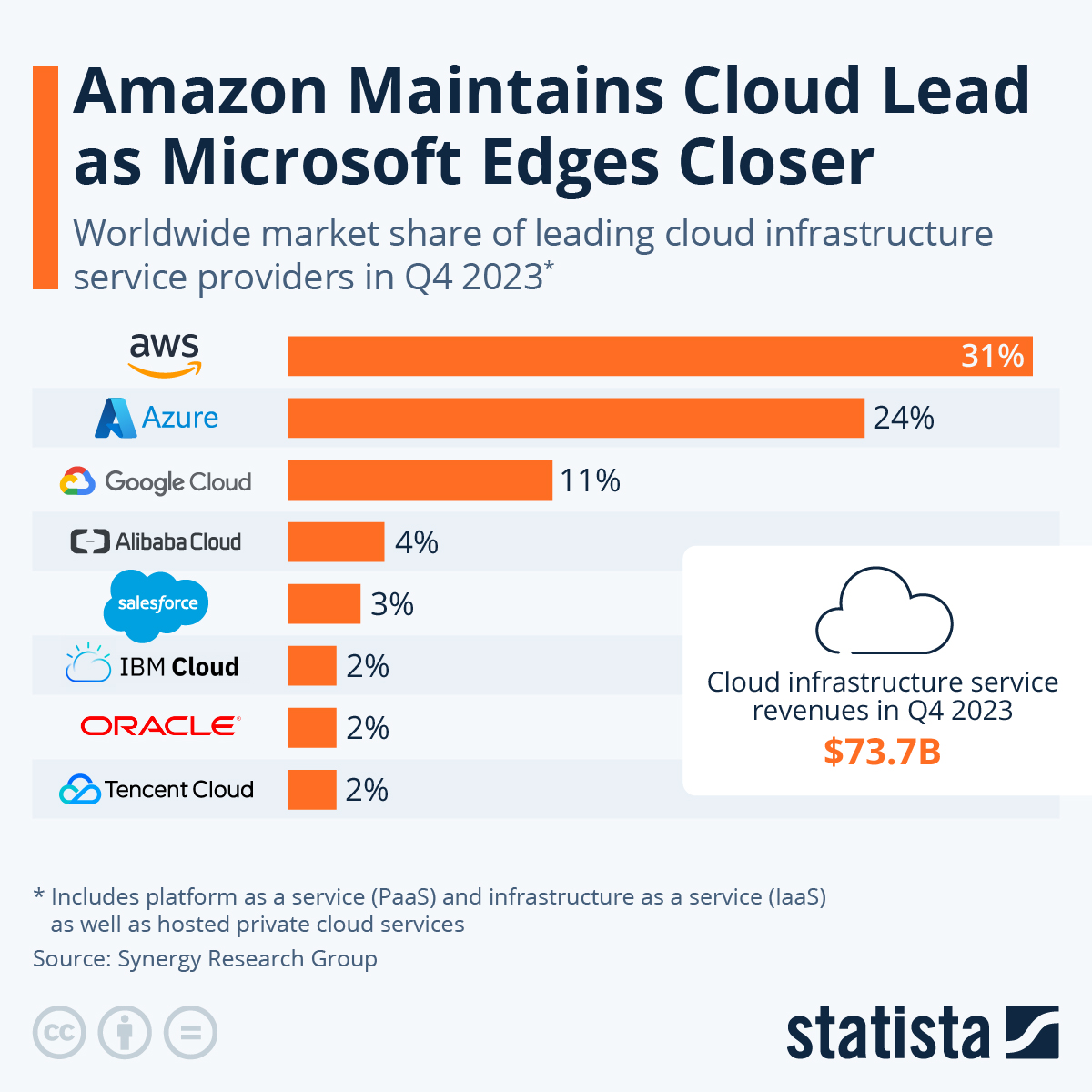
Source: Statista
Amazon Web Services (AWS) has been the clear dominant player in the IaaS industry thanks to its leadership and first-mover advantage. However, Microsoft Azure and Google Cloud are rapidly closing the gap, leveraging their existing enterprise customer relationships and integrating their cloud offerings with popular productivity and collaboration tools. The big three hyperscalers are growing quickly at scale, with AWS growing sales at high teens, with Azure and Google Cloud growing at close to 30% annually. The enormous size of the world’s cloud computing market is intensifying competition with players such as Oracle and IBM now jostling to become key players in the IaaS/PaaS market. This ongoing battle for market share could lead to more competitive pricing, better service levels, and faster innovation, ultimately benefiting customers.
Software is a good industry
The dominant businesses in enterprise software, cloud software, and Software-as-a-Service (SaaS) have business characteristics which make them attractive investments. Some of these attributes are set out below:
High growth potential: The software industry has demonstrated strong growth and the market is enormous! The SaaS market, in particular, is expanding rapidly, with projections indicating significant increases in market size over the coming years due to the shift toward cloud-based solutions and digital-transformation initiatives. Accelerated by the COVID-19 pandemic, this growth is being driven by the increased need for scalable software solutions that can adapt to changing business environments.
Recurring revenue model: SaaS and cloud services typically operate on a subscription-based model, offering predictable and recurring revenue streams and consequently, more stable cash flows and less-cyclical businesses. Unlike the traditional licence-based software business, this new model is attractive to investors because these recurring revenues provide more visibility into future earnings.
Scalability: Cloud and SaaS businesses are highly scalable as they can easily accommodate growing customer demands without the need for significant capital investments. Unlike old economy businesses which usually require significant sums of capital to grow, the marginal cost of distribution for these businesses is minimal or zero. Moreover, the subscription-based model allows for flexible pricing tiers and the ability to add or remove users seamlessly, allowing these businesses to better align their resources with customer needs.
Stickiness (high switching costs): Software businesses often exhibit stickiness due to high switching costs associated with their products or services. Once customers integrate a particular software solution into their workflows, it becomes challenging and costly to switch to an alternative. The switching costs may arise from data migration, retraining employees, or the need to rebuild processes around a new software system. This stickiness creates a competitive advantage as it fosters customer loyalty and reduces the likelihood of churn. The software vendors typically expand their offerings and upsell to their existing customers which results in high net retention rates (i.e., existing customers spending more each year). These high retention rates, combined with the recurring revenue model, lead to attractive customer lifetime values (LTV) and when combined with lower customer acquisition costs (CAC), lead to improving profitability and cash flow visibility.
Network effects: Software businesses can benefit from network effects, whereby the value of their product or service increases as more users or customers join the network. As the network expands, it creates a positive feedback loop, attracting more users and generating additional value. The larger the user base, the more valuable the software becomes, creating a barrier for potential competitors and enhancing the market position of the business.
High margins: Software businesses often enjoy high margins due to the relatively low marginal costs associated with producing and distributing software. Once the initial development costs are covered, the incremental cost of serving additional customers or delivering software updates is typically minimal or zero. This characteristic allows software companies to achieve significant economies of scale, resulting in healthy profit margins.
Innovation and Integration: Software businesses at the forefront of technological innovation, especially when it comes to integrating cutting-edge technologies like artificial intelligence (AI), machine learning (ML), and advanced business analytics. These advancements enhance the functionality and competitiveness of cloud and SaaS offerings, making them more attractive to end users. Software vendors today are sitting on rhetorical gold mines and they are increasingly building value by deploying their own AI agents on top of their respective leading software platforms.
Our team at AlphaTarget has been studying and investing in the software industry for almost two decades. At present, a significant portion of our investment portfolio is allocated to high quality, rapidly growing software businesses.
Sizing the opportunity
Though the enterprise software, cloud computing, and SaaS markets can each be quantified individually, these three closely intertwined markets collectively present an immense opportunity for vendors to drive outsized top-line growth with attractive unit economics.
According to Precedence Research, the SaaS market is likely to nearly triple from US$358 billion in 2024 to US$1.016 trillion by 2032 (Figure 3). Whilst this market-wide growth forecast is impressive, it is notable that some mission-critical software vendors are growing their revenues and free cash flows at an even faster clip.
Figure 3: SaaS market size expected to triple by 2032
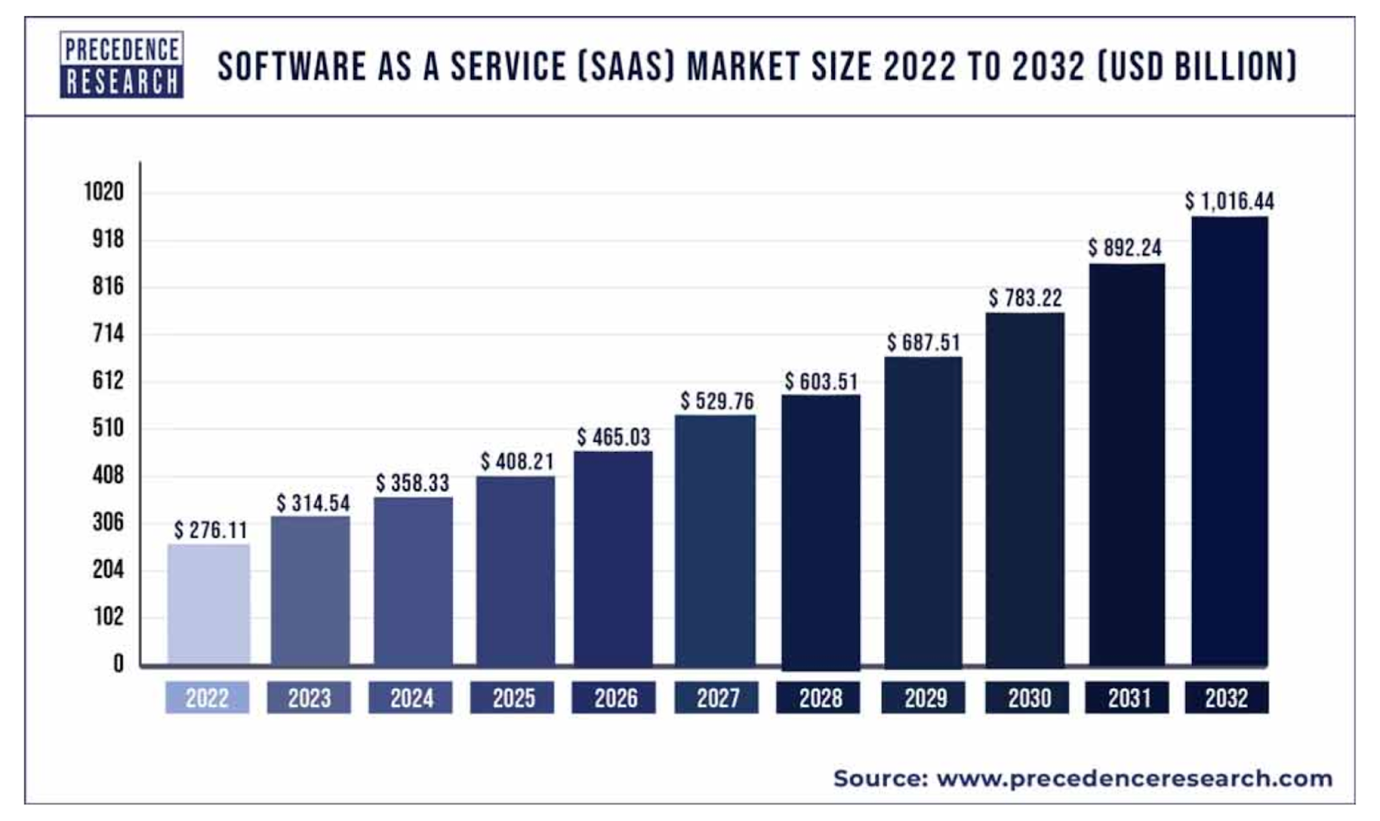
Source: Precedence Research
While the aforementioned leaders in the IaaS space are undoubtedly dominant businesses, our in-depth research at AlphaTarget has led us to invest our capital in the most promising, rapidly growing enterprise software and cloud-computing businesses with long growth runways. Our preferred businesses are run by strong management teams and we expect them to keep performing well over the foreseeable future.
At AlphaTarget, we invest our capital in some of the most promising disruptive businesses at the forefront of secular trends; and utilise stage analysis and other technical tools to continuously monitor our holdings and manage our investment portfolio. AlphaTarget produces cutting-edge research and those who subscribe to our research service gain exclusive access to information such as the holdings in our investment portfolio, our in-depth fundamental and technical analysis of each company, our portfolio management moves and details of our proprietary systematic trend following hedging strategy to reduce portfolio drawdowns. To learn more about our research service, please visit subscriptions.